
Few neuroscientists have changed the way we think about consciousness as much as Adrian Owen. His work has shown that some people trapped behind devastating brain injuries remain startlingly aware, while his latest book, Think Before You Think, shows why smart people make silly mistakes. Fresh from questioning whether the search for a grand theory of consciousness has gone off the rails, he joins me for a rapid-fire tour of what makes him tick:
Tennis or walking round the house?
Tennis. I’ve built a surprisingly successful scientific career out of asking people to imagine playing tennis in brain scanners, despite the fact that I’m actually a terrible tennis player myself. Walking round the house was always the control condition and after nearly twenty years, I’m not about to switch sides.
Cambridge or Ontario?
Tough choice. Ontario is where I built the lab and much of the life I have now, but Cambridge is where I became a scientist. Fortunately, there is a Cambridge in Ontario, so whenever I’m feeling homesick I can drive there and be disappointed in entirely new ways.
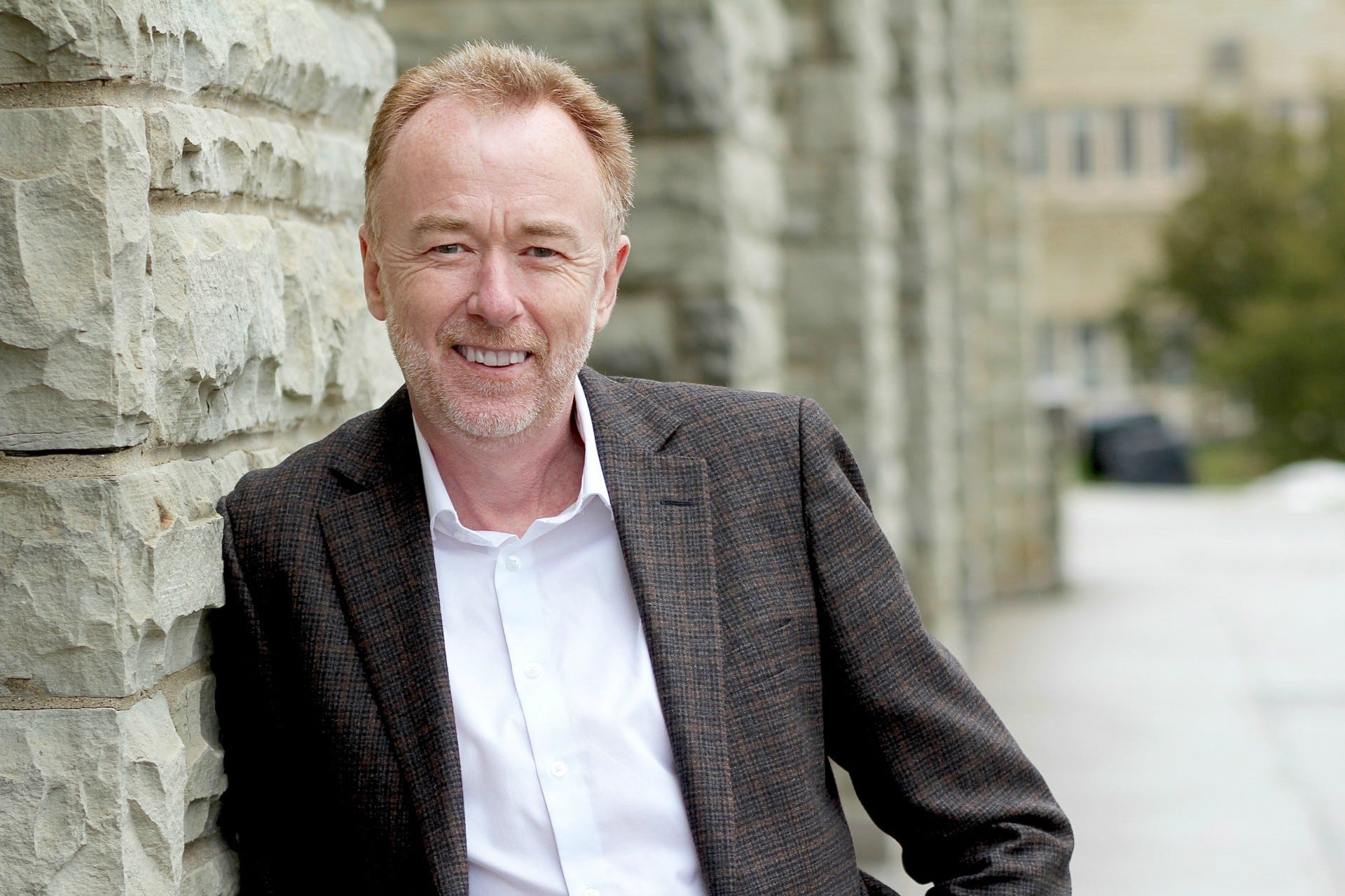
Guitar or brain scanner?
I honestly couldn’t choose. I still get tremendous joy from seeing the living brain at work through a scanner, just as I do from creating and singing songs with a guitar. I’m extraordinarily lucky to have found two things that make me genuinely happy and even luckier that nobody has yet asked me to do both at the same time.
One number or lots of numbers? (IQ, obviously)
Lots. Trying to reduce cognitive fitness to a single number is about as sensible as trying to produce physical fitness to one single number. Who’s fitter? Usain Bolt or Mo Farah? It makes no sense to compare them because they are physically fit in entirely different ways. And so it is for cognitive fitness. As you and I discovered in our collaborative study a decade or so ago, trying to reduce human cognition to a single number is rather like trying to describe a person by their height. It tells you something, but leaves out most of the interesting bits.
Mind or body?
Neither. I’ll take brain any day. As I have often argued, your brain is who you are. It’s every plan you’ve ever made, every person you’ve fallen in love with, and every regret you’ve ever had. Your brain is all there is. It’s the pulsating essence of you as a person. Without a brain, our sense of “self” is reduced to nothing. Without a heart we can live on with the help of machines. A patient with an artificial heart is still the same person. Without a liver or kidneys we can survive, personality unchanged, until the death of another soul provides us with a transplanted organ with which we can resume our lives, pretty much as we did before. We can lose arms, legs, eyes, and more and remain the same people, altered but nevertheless still us. Yet without our brains we are nothing more than a memory to others. We are not even a shadow of our former selves. We are gone.
Thinking on your feet or thinking in an armchair?
Thinking on my feet. Some of my best ideas have arrived while I was talking, working, walking, or even playing music. There’s something about keeping the brain (and preferably the body) in motion that seems to create possibilities. An armchair gives you time to think; interacting with the world gives you things to think about.
A brisk walk or a brain training app?
A brisk walk for sure, as you know, in 2010 we showed in a paper in Nature that brain training apps really don’t do very much except improve how well you do on brain training games. 11,400 people can’t be wrong!
Exercise bike or video game?
Video Game. In another collaborative study with your team last year, we showed that people who play video games regularly are cognitively sharper in a number of different domains, including reasoning and visuospatial abilities. Short bursts of aerobic exercise, on the other hand, seem to be good for your mental health, so both have benefits, but they’re rather different. Luckily, I have never suffered any mental health issues, but I do worry about my cognition as I get older.
Seven hours’ sleep or nine?
Ha! Either. Just as long as I don’t get less than seven or don’t get more than nine, I know that I’m staying at my cognitive fittest. Right around eight hours is where you want to be and that doesn’t change as you get older, contrary to popular opinion. Older people certainly sleep less, but we showed in 2018 that the amount of sleep they need to stay cognitively fit is exactly what it was when they were younger.
Lark or night owl?
That depends on the occasion. I still love going out to see live music so I’m often a night owl because I have to be. But during the week, I’m typically in bed by 9 PM, and I wake between 6 and 7 AM.
Pacing about or sitting still when you’re trying to remember something?
Pacing, pacing, pacing. Moving helps me think.
Hangry or zen?
Hangry. Zen is an admirable aspiration, but I’ve learned not to make important scientific decisions on an empty stomach. Maslow probably should have put “reviewing manuscripts” somewhere above lunch.
Writing a paper or writing a song?
Again, I honestly can’t choose because both are emotionally very similar to me and equally important. I love writing songs because there is a tremendous feeling of having created something from nothing, something that then exists in the world for others to experience. Scientific papers are very similar. If you do it right, a lot of it is about taking an experience or an idea you have had and turning it into something that others can can then read, experience, and hopefully be influenced by.
Gig nerves or conference nerves?
Gigs. I’ve given thousands of academic talks during my life, and I never get nervous these days because I know exactly what I want to say and what questions I am likely to get from my audience. Gigs are a different matter, and I do occasionally get a bit nervous, but it’s because there are so many different things to remember all at once, as well as having a good time. Maybe I just like predictability and control. Academic talks offer both. Gigs offer neither.
Rock star or neuroscientist, if you could only have had one career?
Neuroscientist. Emphatically. I’ve had a fantastic career: I’ve travelled the world, met extraordinary people and been allowed to spend my life trying to answer questions that genuinely fascinate me. And, for the most part, I’ve never had to wonder where my next paycheque was coming from. I don’t know many musicians who have had that luxury, although admittedly, very few neuroscientists get an encore.
Fender or Gibson?
I play a Fender Telecaster and have for years.
Beatles or Stones?
Beatles. 8 days a week.
Hunch or hypothesis?
Hunch. A hypothesis is what you write in the grant application after the hunch has turned out to be right. Science likes to pretend it proceeds neatly from hypothesis to experiment to discovery; in my experience, quite a lot of it begins when I think, “That’s odd…” or “Surely that can’t be true”, and deciding to have a look.
Data or anecdote?
Data. Anecdotes are where interesting questions often begin, but data are how we find out whether the interesting story we’ve just told ourselves is actually true. The brain is remarkably good at finding patterns, including ones that aren’t there.
Big online study or small, careful lab study?
Big online study. I love a beautifully controlled lab experiment, but there’s something irresistible about being able to test tens of thousands of people and discover that the effect you thought was interesting in 20 undergraduates is either genuinely interesting (or has quietly disappeared). Big data are messy, but so are people.
Science or Nature?
Science. I am lucky enough to have published in both, but my 2006 Science paper changed my life in so many ways, both academic and personal, that I can’t help but have tremendous respect and affection for that journal.
Reviewer one or reviewer two?
It’s always Reviewer 2!
fMRI or EEG?
fMRI hands down. Those exquisite pictures of the living human brain trump squiggly little lines for me every time. EEG has its place but it will never have the visceral effect that I have seen fMRI have on so many occasions over the years. Whether we’re communicating with a patient presumed to be vegetative of mapping the broken white matter of NHL players, that thrill never goes away for me.
Descartes or Darwin?
Darwin. Descartes gave us “I think, therefore I am.” Darwin gave us an explanation for how something capable of thinking got here in the first place. As a neuroscientist, I think I have to give him the points. Besides, I grew up not too far from Down House in Downe, Kent, where Darwin lived for the last 40 years of his life and wrote On The Origin of Species.
Wilder Penfield or Oliver Sacks?
Penfield. I was trained in neuroscience by Micheal Petrides, who was in turn trained by Brenda Milner ,who was in turn trained by Wilder Penfield. So, I guess that makes me his academic great grand child. That said, Sacks wrote some great books, several of which really influenced me as a young scientist.
Crossword or sudoku?
Neither. I don’t do crosswords and I have no idea how to play Sudoku!
Maple syrup or Marmite?
Marmite. I’ve lived in Canada (and been Canadian) for long enough to appreciate maple syrup, but not yet long enough to believe it belongs on everything. My wife, son, and I, tap the maple trees in our garden at home every spring and always get a few litres of gorgeous, fresh syrup. Try squeezing Marmite out of a tree!
Tim Hortons or a proper cuppa?
Builder’s tea for me.
Writing books or reading them?
Writing books. I hardly read any books. It’s just not something I find easy to prioritise between writing books, making music, and doing science. I have a lot of creative hobbies and hardly ever sit down with a book.
Me as co-author or me as interviewer? (Be kind. Or don’t, it’ll make better copy.)
Interviewer. We’ve tried to write a number books together over the years Roger, and it’s never quite worked out. You’ve written books, I’ve written books, but we’ve never written one together. On the other hand, you’ve interviewed me a bunch of times and it’s always been fun.
It worries me that he doesn't read