
I’m writing this on the train to Liverpool, heading to the Labour Party Conference with an iPad screen of notes, a ghastly cup of coffee and a slight sense of foreboding, not least about getting into the secure zone.
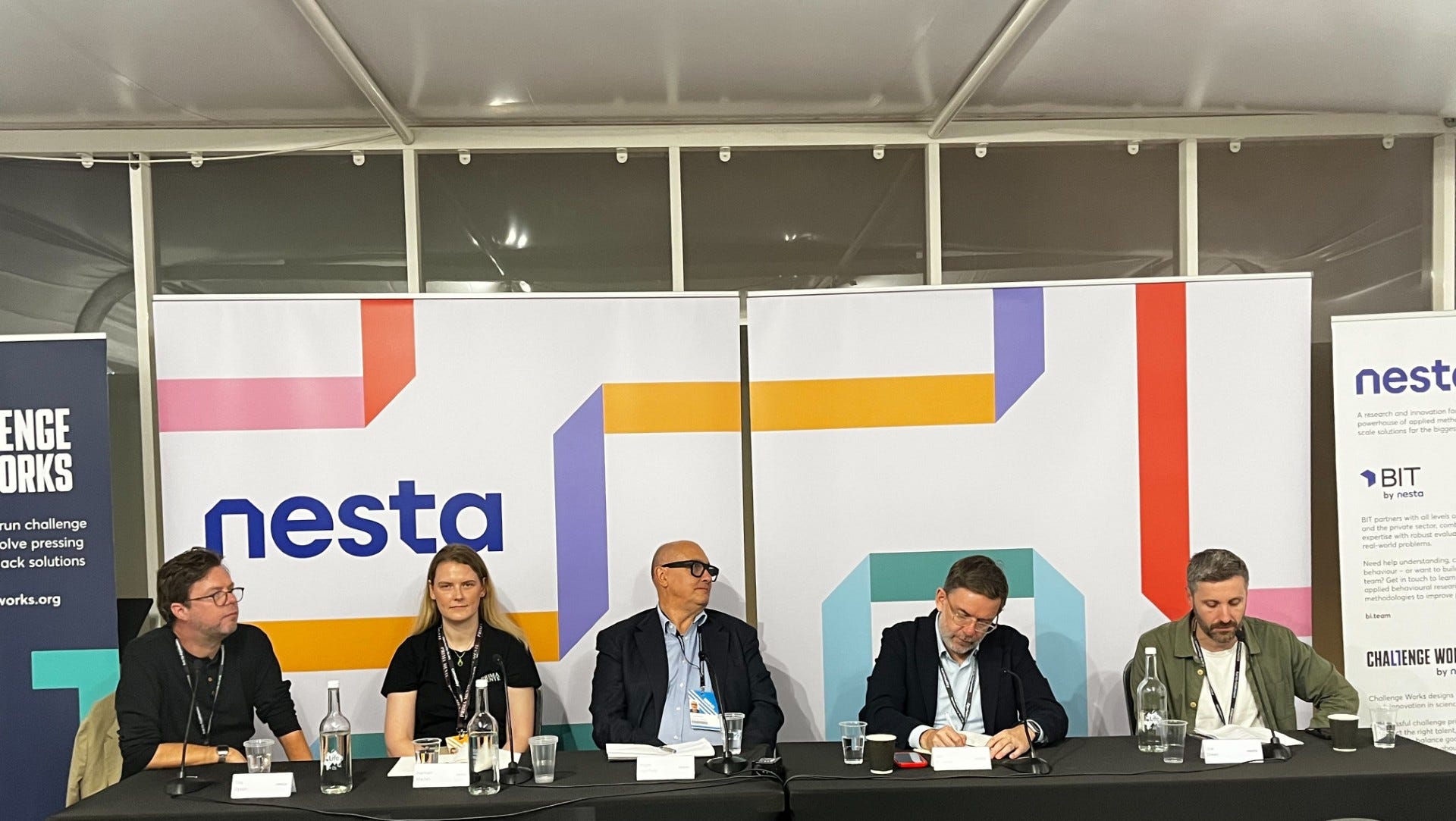
This afternoon I’ll be speaking in a personal capacity, as a member of the Board of Longitude, to discuss a prize that changes the future rather than celebrates the past. Chaired by Joe Owen of Nesta, the panel brings together Tris Dyson of Challenge Works, Iain Bundred of the BBC, Hannah Madan, co-founder and COO of the brain-focused AI biology company Prima Mente, and me.
Having written about the Nobels for decades, and raced to congratulate countless newly-minted laureates in my previous life as a Fleet Street hack, I’d be the first to admit that nothing can compete with them, despite their well documented flaws.
Every October the world of science waits for a call from Stockholm, and some bleary-eyed professor in Pasadena or sceptical researcher in Cambridge gets their due recognition at long last, sometimes decades after all the blood, sweat and toil that made it possible.
So here’s the proposal from Nesta, a UK innovation foundation, and Challenge Works, which Nesta uses to turn ideas into solutions. Let’s blend the grandeur of the Nobel with the focus of a challenge prize to create a British gong series of similar stature, held every year, that rewards what hasn’t been done yet. As Joe Owen puts it, “The prizes should look to the future, unlike the Nobel.”
He points out that, last year, Joel Mokyr shared the economics Nobel partly for explaining how Britain’s industrial enlightenment made modern growth possible. Science and technology generate some of the most inspiring stories of our past. They should shape where we go next, as well.
On the origins of challenge prizes
The most celebrated challenge prize was British. In 1714 Parliament faced a problem that had disastrous consequences for navigation, trade and human life: nobody could reliably work out their longitude at sea. So it offered up to £20,000, a fortune, to anyone who could find a way to determine longitude.
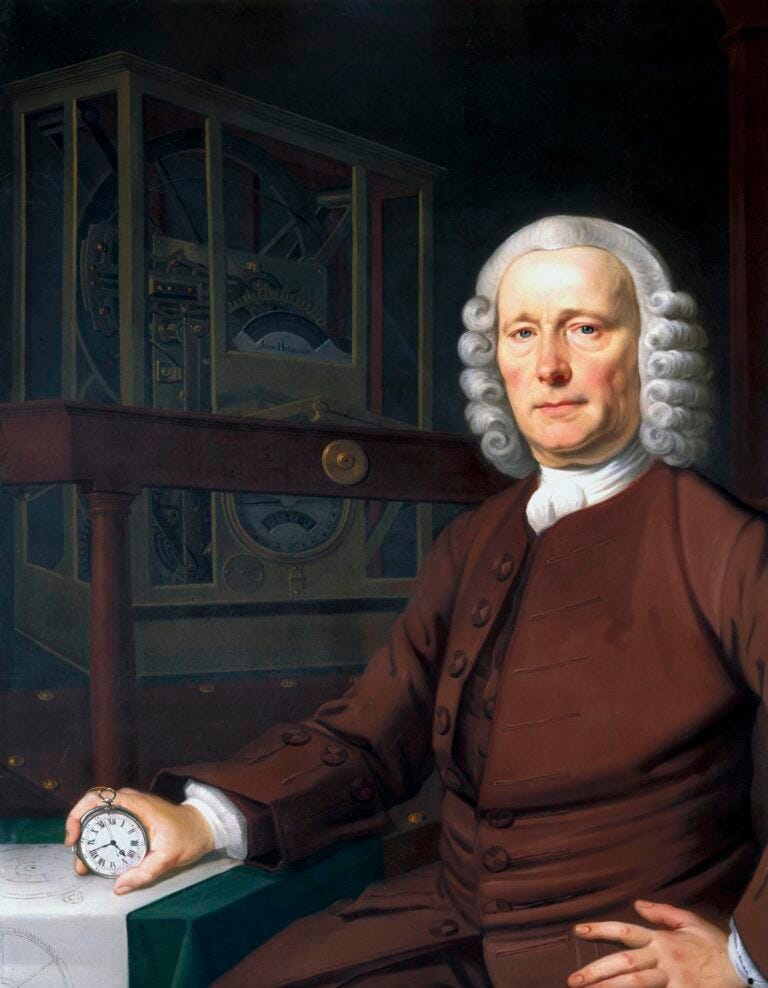
The safe bet was an astronomer. But the innovator who solved it was John Harrison, a Yorkshire-born, self-taught carpenter and clockmaker who grew up in Lincolnshire. Even though his marine timekeepers were marvels, the original Board of Longitude treated him badly. In the end it took Parliament, nudged by George III, to see Harrison receive most, but not all, of what was due.
Lord Rees, a recent Astronomer Royal, and chair of the Longitude Committee when the prize was relaunched in 2014, remarked: “The Oscars. The Booker Prize. The Nobels. The award ceremonies that punctuate our year celebrate great past achievements. But there is another type of award, one that looks to the future – a challenge prize. Such prizes incentivise future successes and are open to all.”
And he points out there are lots more examples. “A prize to preserve food for Napoleon’s army led to the invention of tinned food. A century later, another prize stimulated Lindbergh’s solo transatlantic flight. More recently there have been prizes for sub-orbital space flight, driverless cars, robots that operate in hazardous environments, and so forth.”
These underline why this kind of challenge works. Prizes define the problem, not the solution. They reward success, not promises. And they throw the doors open to outsiders, the Harrisons of this world, who’d never get past the first round of a conventional grant committee.
A good prize flushes out ideas, teams and private money that would otherwise have stayed on the sidelines. And you only pay the big money when someone delivers. Why wouldn’t Government bean counters warm to this approach?
We know the challenge
We’ve been road-testing a rebooted challenge prize format in Britain for more than a decade. In 2014, to mark the 300th anniversary of the Longitude Act, the prize was reborn. I wrote about it for the Telegraph at the time, in a piece rather immodestly headlined “Calling all geniuses for the new Longitude Prize,” and I’ve sat on its committee ever since.
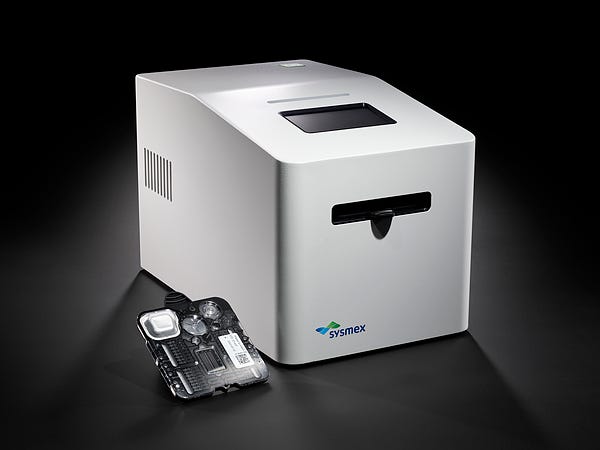
The public, voting via the BBC’s Horizon, picked antimicrobial resistance from a shortlist of six great challenges (I championed ensuring everyone can have access to safe and clean water). In 2024 the £8 million prize went to Sysmex Astrego for a rapid test that tells doctors which antibiotics will actually work against a urinary tract infection, in a fraction of the time a lab culture takes.
Since then, the Longitude Prize on Dementia has been won, in March this year, by CrossSense, whose AI-powered smart glasses help people with early-stage dementia recognise objects and get through everyday tasks. And the £7.5 million Longitude Prize on ALS is now under way, using AI to hunt for drug targets for the form of motor neurone disease that Stephen Hawking lived with for more than half a century.
Tris Dyson, founder of Challenge Works and managing director of the Longitude Prize, told me: “Challenge prizes are a race, they tap into the competitive spirit of researchers and innovators and motivate everybody to up their tempo and pivot quickly. Prizes create a level playing field as payment is based on results—your institution or company background is irrelevant.”
What Nesta proposes is to turn these admirable one-offs into something bigger and more strategic. A new challenge every year, chosen after public consultation, with the BBC making a proper fuss of it all. And an annual ceremony that doubles as a progress report: who’s through to the next stage, who’s fallen at a hurdle, who’s won.
The budget Joe Owen suggests is no more than £20 million a year. The government spends more than £20 billion a year on research and development, so we’re talking about a tenth of one per cent. And a ceremony needs a venue, so I’ll register an early bid for the Science Museum, which is already awash with life-changing innovations from previous centuries.
Isn’t this just a PR stunt?
I expect somebody in the audience to say so. But publicity is part of the point, not an unfortunate side effect. If we want a nation of Harrisons, we all need to see that invention is thrilling, well rewarded and worthy of primetime TV.
And there’s a safeguard built in. Under the staged design Joe describes, teams get seed money, then have to build prototypes, then trial them, so every pound is tied to a milestone. Winners should also get something money can’t easily buy, like access to data sandboxes or regulatory permission to test things in the real world. That’s where government comes in.
As for who picks the topics, experts should draw up the shortlist and the public should choose. A public vote gave us antibiotic resistance, which scientists would’ve ranked near the top anyway, so I’m inclined to trust people when they’re given serious choices. That’s also how you avoid the Boaty McBoatface effect (though, I have to confess, the name has grown on me).
My pick for year one
Being biased, having co-written Virtual You with Peter Coveney, I’d go for a simple digital twin of an elderly patient that runs on a GP’s laptop, one that can work out how their particular mix of drugs and chronic diseases will interact, one person at a time. It’s hard and even a maverick with the right theory, lots of data and a decent laptop could crack it. Digital twins offer the prospect of truly personalised and predictive medicine, so it matters to millions of people,
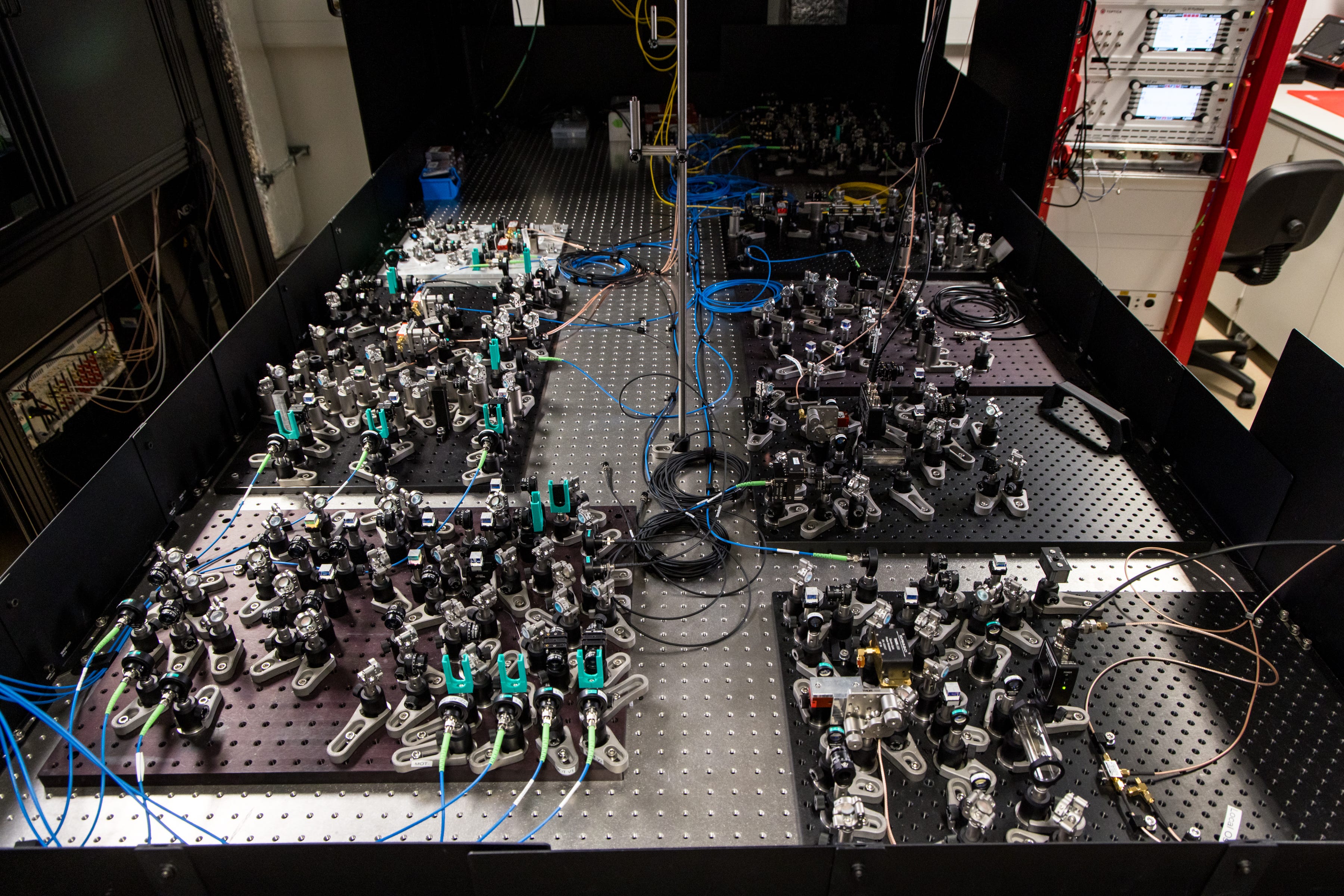
My heart says quantum computing, which is revolutionary but still a long way from practical. But my head agrees with Lord Rees that it’s doubtful anyone could get there in a few years, let alone a latter-day Harrison. He also makes the point that the public needs to see progress so, for example, a high profile test of robot dexterity would make more gripping television, as seen recently in the World Humanoid Robot Games in China.
Whatever emerges, I believe, passionately, that science and engineering are the best tools we have for changing the world for the better. A prize like this would put them where they belong, in the public eye, so they can change life, culture and everything. Stockholm can keep the past. In Liverpool, let’s focus on how to make a better future.