
New Scientist celebrated seven decades of explaining life, the universe and everything with a party at the Science Museum a few days ago, ahead of the magazine’s official birthday.
The first issue appeared on 22 November 1956 and cost a shilling. I edited the magazine between 2008 and 2011, so I felt a certain proprietorial glow at the festivities. However, it dimmed a bit when I remembered I’d been asked to talk about what lies in store for AI. Gulp.
The evening in the museum’s IMAX and our space gallery wasn’t about looking back. Cat de Lange, the current editor, steered us through what the next 70 years might bring. Penny Sarchet discussed health, from cancer immunotherapy and gene editing to the challenge of living well for longer rather than just living longer. Tim Revell tackled space and quantum technologies, and left us with a haunting thought: one day we may look up and see more satellites than stars.
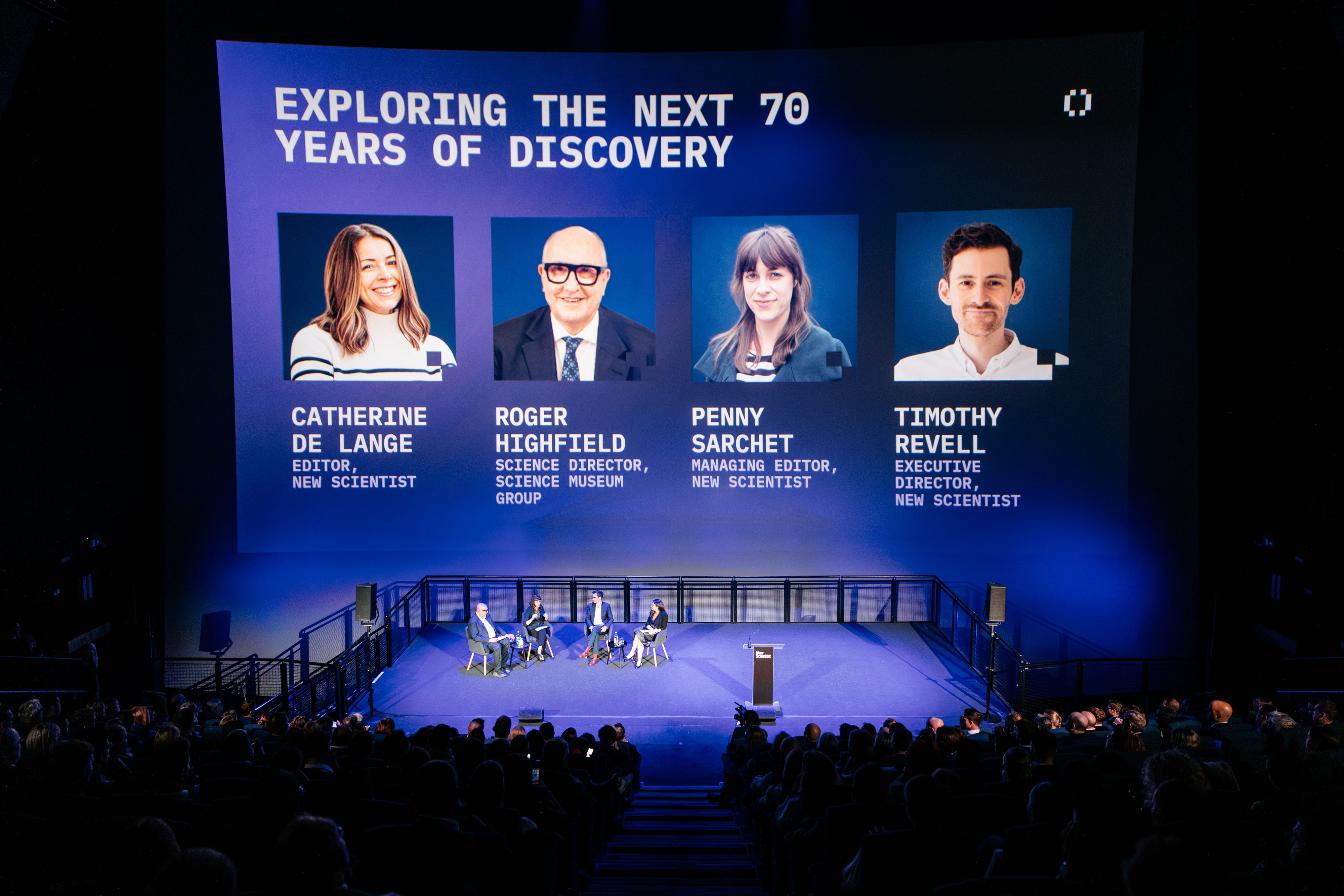
My patch was intelligence. We’re building machines that seem to reason, yet we still can’t agree on what intelligence actually is. I tried to take a deeper look at human cognition when I was editor of New Scientist. I ran an online experiment with the neuroscientist Adrian Owen that drew more than 100,000 people, after being launched in the magazine

Our mass experiment underlined how you can’t boil intelligence down to a single number like IQ. At least three distinct abilities contribute: short-term memory, reasoning and verbal skill. So why do we rank AIs on only one scale? And why do we talk about artificial general intelligence as if it’s a simple finish line?
Today’s AI has deeper problems. It can rely on trillions of parameters with no physical meaning. It inherits biases from its training data and rarely tells you how uncertain it is. It offers little or no insight into mechanisms, and it can fail to capture even elementary scientific laws.
Adding some physics would help (somewhat pretentiously, I like to call it Big AI). So would a bit of humility.
Your brain runs on around 20 watts, about the power of a dim light bulb. Yet it copes with uncertainty, patchy information and scarce resources. That’s why I suspect the long term future of AI may look less like a server farm and more like an analogue computer, even something wet and biological.
On the night, Jaime Teevan, Microsoft’s Chief Scientist, talked with Cat about how AI might change the nature of work, not just speed it up. I loved her idea of “productive friction”, the useful resistance that makes us think harder, as opposed to technology that smooths away each and every obstacle. And Mark Thomson, Director-General of CERN, reminded us that however excited we get about applying science, there are still profound questions to ask about the universe itself.
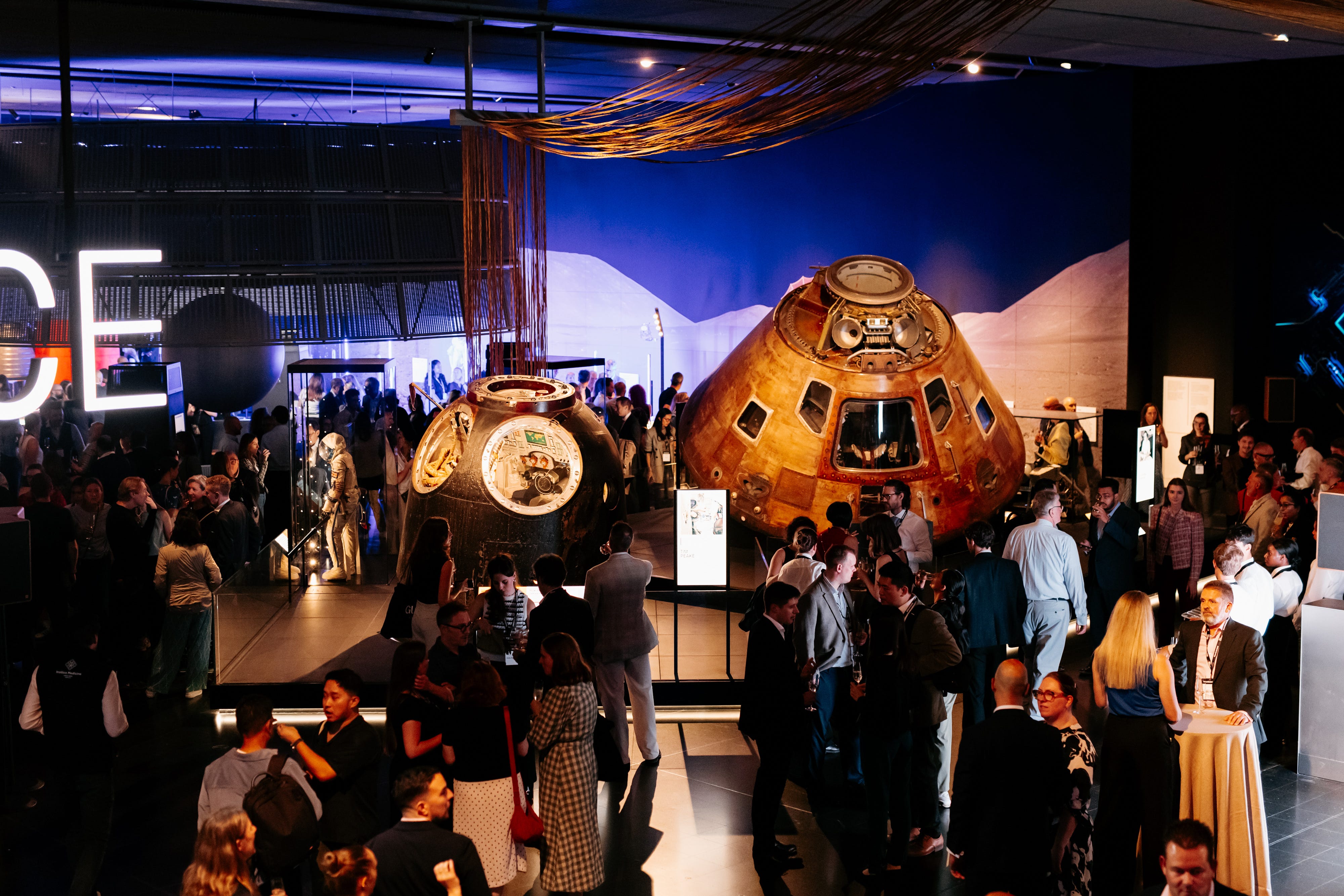
The hoopla also saw the launch of New Scientist Business, as it enters its eighth decade. Its editorial director, Ed Glanville, shared research commissioned by New Scientist suggesting that public trust in the people building tomorrow’s technologies is surprisingly fragile: only 19% of respondents trusted technology companies to develop future technologies responsibly. Start-ups scored 7% and large companies just 5%. Universities, by contrast, were trusted by 68%.
In other words, businesses that want credibility may need to borrow from science itself: they need transparency, evidence and openness about how knowledge is made, and how we forge understanding that stands the test of time.