
What struck me most about my visit earlier this month to the plush premises of Château Pichon Baron in Pauillac was what wasn’t happening.
At this time of year, the place should be humming. As recently as 2021, picking here didn’t start until 27 September and the last Cabernet Sauvignon came in on 7 October. Had I turned up then, I’d have been dodging tractors and crates of grapes. This time the processing machines sat silent and the pickers had long gone.
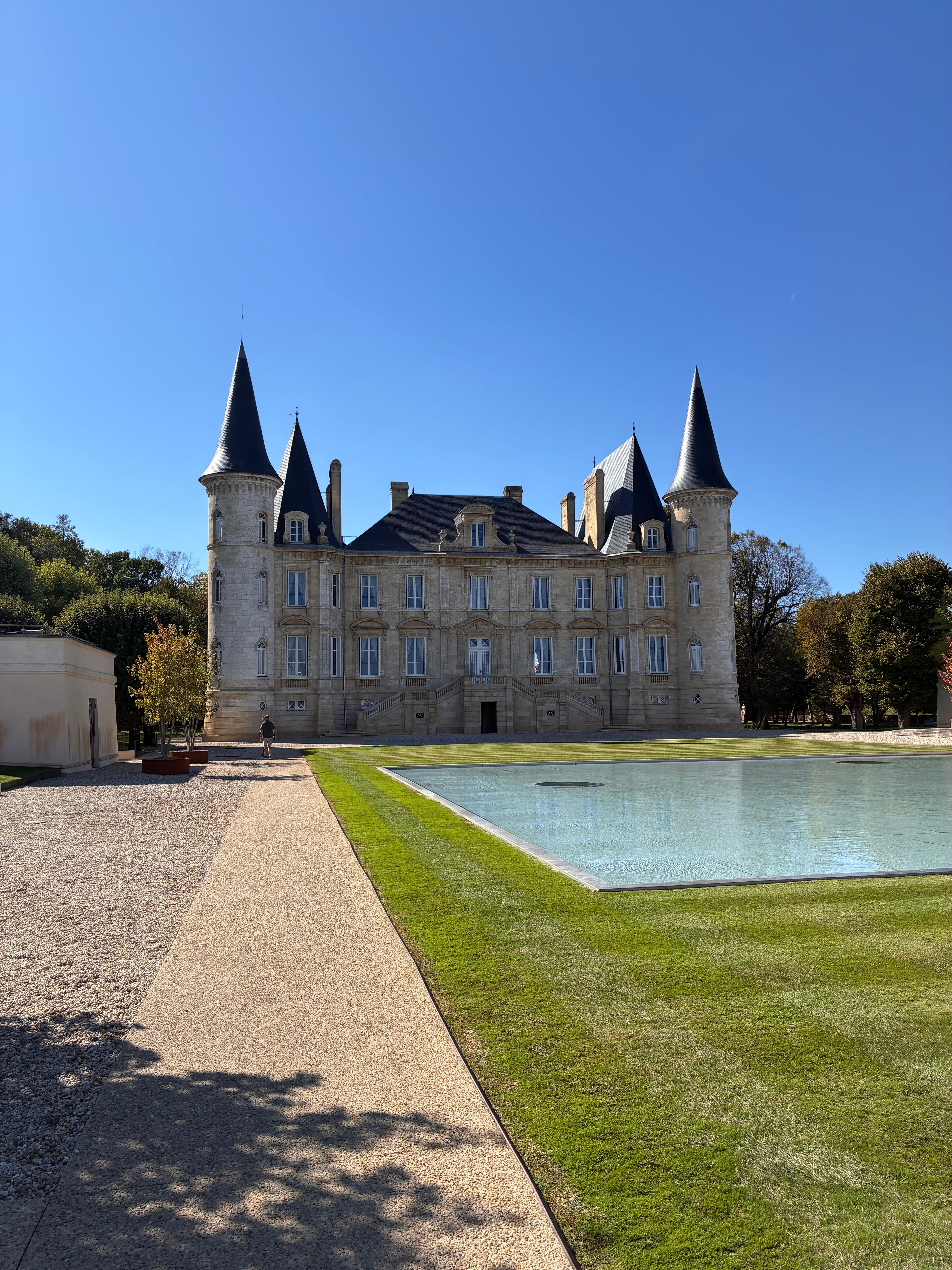
Château Pichon Baron, formally known as Château Pichon Longueville Baron, sits on the southern edge of Pauillac. It’s a Second Growth by the 1855 Classification, and its neo-Renaissance château, built in the mid-19th century, has twin pointed turrets that have become an emblem of Pauillac itself
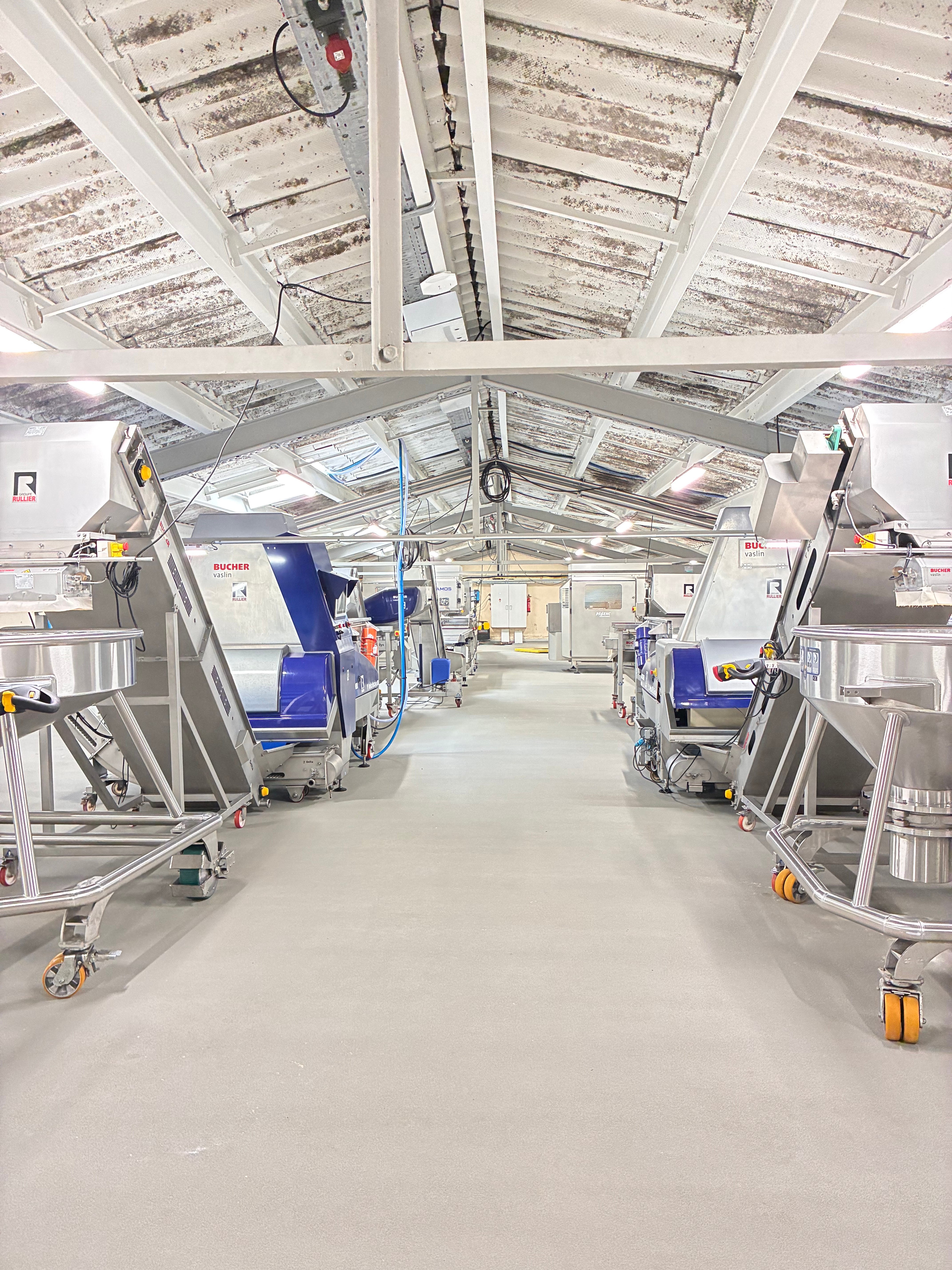
I’m one of a small group our guide, Karim Laveille, leads around a complex of cellars and processing halls that’s cool in every sense, tucked beneath the ornamental pond in front of the château.
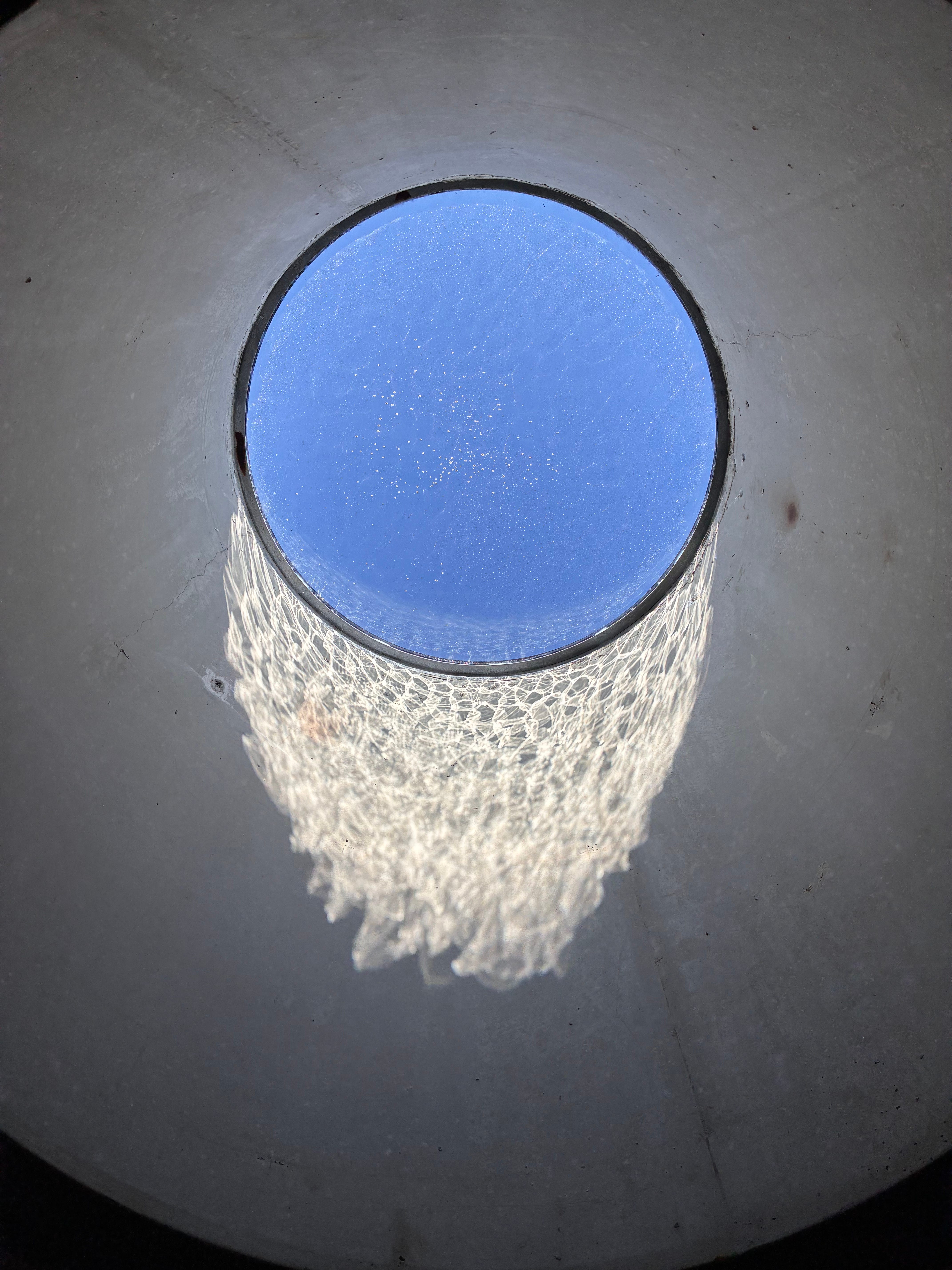
The estate occupies prime gravelly rises above the Gironde estuary. Karim proudly shows us a glass tube of soil, a slice of the terroir they prize so highly. This is Médoc country, where layers of gravel over limestone and clay suit Cabernet Sauvignon perfectly, though they also grow a good deal of Merlot and smaller parcels of Cabernet Franc and Petit Verdot.
A Month Early
Pierre Montégut, the château’s technical director, tells me that 2026 “is our earliest vintage in a very long time. We started picking on 25 August and finished on 18 September, the date on which we started harvesting in 2009. Step by step, and faster over the last five to ten years, the start of harvest has moved from the last week of September to the last week of August.”
Across the wider region it’s the same story. The first grapes of Bordeaux’s 2026 harvest, destined for the region’s sparkling crémant, were cut on 6 August. That’s the earliest start on record, almost a fortnight ahead of 2025, which was itself an early year.
Decades ago, the worry in the Médoc was that grapes wouldn’t ripen enough. Now some of the most prized varieties ripen earlier and earlier. And that raises questions about the world’s most famous wine regions: its sense of what a Bordeaux actually is.
When Heat Was a Friend
Météo-France reckons the region warmed by about 1.4°C between 1959 and 2016, and Kees van Leeuwen of Bordeaux’s Institute of Vine and Wine Science puts the rise in temperature over the growing season, from April to September, at around 2°C in 70 years. Summers are drier too. In a 2016 study, he and a colleague found that half of the 20 driest vintages in 61 years came between 2000 and 2012.
This year pushed things further. “We experienced five or six heatwaves, with temperatures sometimes exceeding 40°C,” says Pierre. “At Pichon Baron, the hottest day was June 24th, when the thermometer reached 43.1°C. In terms of rainfall, we recorded 232 mm from March to August 2026. By comparison, over the same period, we had 242 mm in 2025 and 387 mm in 2024.”
For most of the 20th century a hot summer meant a great vintage, because Bordeaux sat at the cool edge of where you could reliably ripen Cabernet. Heat was the friend that rescued a vintage. Today the question is whether it could one day be the enemy.
Frost, Then Fire
Budburst and flowering are creeping earlier, which leaves tender shoots exposed. “Our winters are less and less cold, so the vine cycle starts very early, with the risk of spring frost,” says Pierre. In 2021 bud break here came almost a week early, then severe frost struck in April.
Then there’s fire. In late July a blaze north of the Arcachon basin burned around 42,000 hectares and forced 220,000 people from their homes. It was the region’s biggest fire since the great Landes blaze of 1949. But it didn’t reach the great estates of the Médoc.
“The fire was huge,” says Pierre, “but the wind pushed it towards the ocean. So even though it started not far from us, the grapes were never affected. It also happened very early in the ripening period, so there was virtually no risk.”
Even so, they ran tests to check for smoke taint. Fortunately, he says, “they all came back negative. I can tell you that the fruit in every tank is simply wonderful, and there is no doubt whatsoever about its quality and purity.”
Rules Written in 1936
All this is putting pressure on rules that have governed Pauillac since its appellation was created in 1936. Irrigating vines is banned except by special dispensation. The list of permitted grapes is short and fixed. Even how close together you plant your vines is laid down.
Some growers are wondering whether they’ll eventually need water, and new heat-tolerant grape varieties. One famous Pomerol estate, Château Lafleur, has already walked out. From the 2025 vintage it left the Pomerol and Bordeaux appellations and now labels its wines Vin de France, partly so it can irrigate when it needs to and plant its vines further apart.
Pichon Baron is taking a less dramatic step. “We have been discussing this subject with the INAO (the body that oversees French AOCs),” Pierre tells me. “Over the last season, trials were carried out in various vineyards across the appellation, and in 2026 we were authorised to irrigate certain parcels and still harvest them under the appellation.
In our view, irrigation will certainly be necessary in the future during the first five or six years of a vine’s life, so that it develops a strong, deep root system. After that, we believe the vines will be very resilient and able to adapt to high temperatures and/or drought. Discussions are now under way to adapt the appellation rules to this new context.”
The estate is also studying a switch to more vigorous rootstocks, lower planting density so water is easier to manage, and doing more to improve soil biodiversity and how much water the soil can store
Hedging Bets
Like its neighbours, Pichon Baron hedges its bets, with different grape varieties, different plots and different barrels treated in different ways. “Every vintage, we work with 30 to 50 lots, plus seven or eight press wine lots,” says Pierre. “Each lot comes from a single fermentation tank, which may hold one parcel or several. The vineyard team and I choose these parcels together by tasting the berries, and we group fruit with similar characteristics and tannins. Then, during vinification, we adapt the extraction to the profile of each lot.
The aim is to preserve the fruit and make balanced wines with elegant tannins, in keeping with the style of the vintage. So, whether the vintage is warm or cool, our approach never changes: to make fine, elegant Pauillac.”
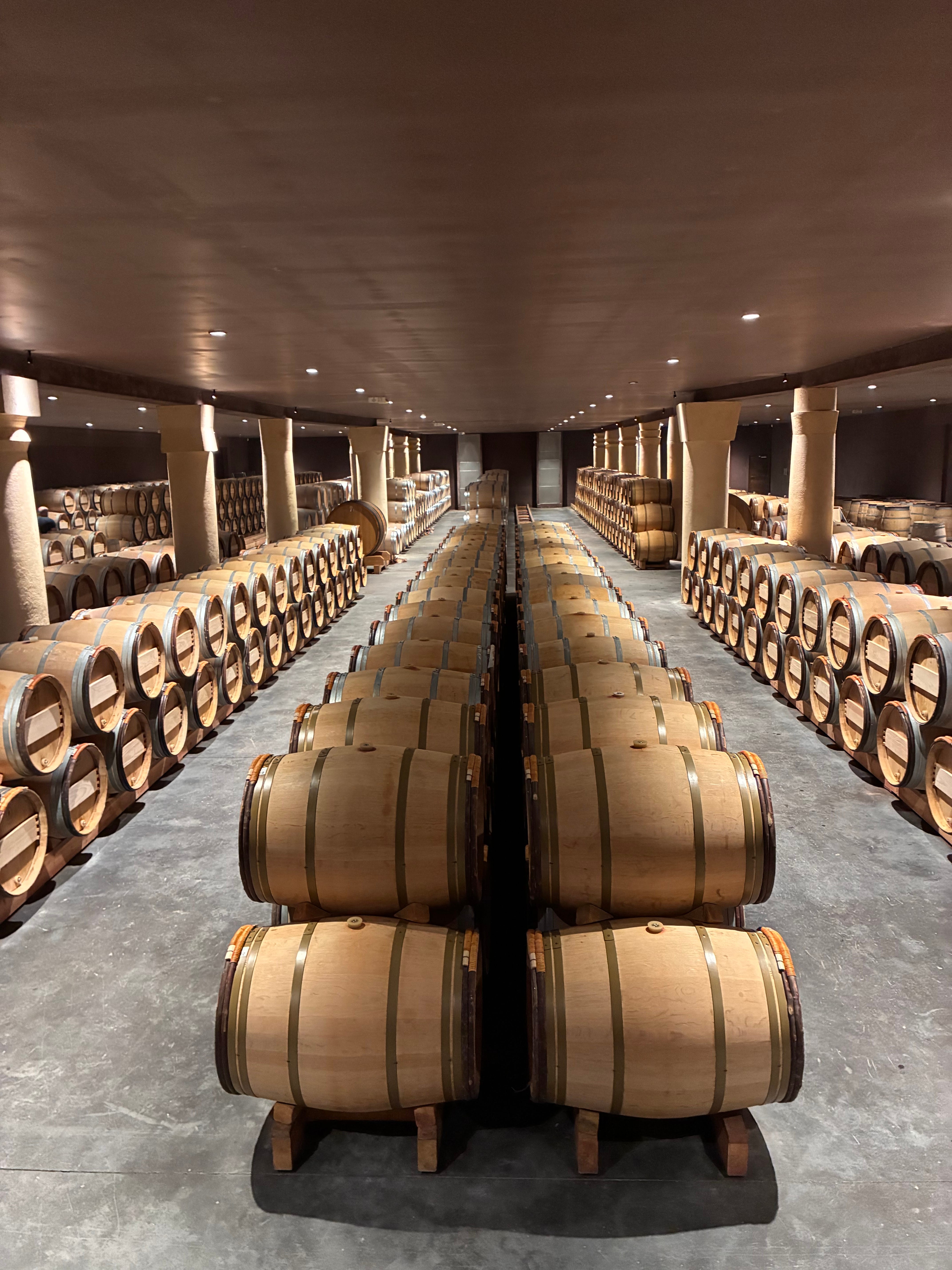
But how do you keep freshness and finesse in a hot year? And is there a point where heat would become a real problem for the style of Pichon Baron? “We introduced our new approach to vineyard management in 2018, and we are now seeing the results,” he replies. “One of the most striking is that we are keeping pH levels low. In 2026, for example, pH ranged between 3.65 and 3.85.”
Alcohol is the other worry. Merlot, the earlier-ripening of the big grapes, soaks up the sunshine and turns it into sugar, then the sugar becomes alcohol. At Pichon Baron, Merlot at 13.5% has been normal for many years, and in celebrated hot vintages such as 2018 and 2019 it reached 14.5%. But the château insists that hasn’t come at the cost of finesse, one of the qualities for which Pichon Baron is famous. The terroir does much of the work.
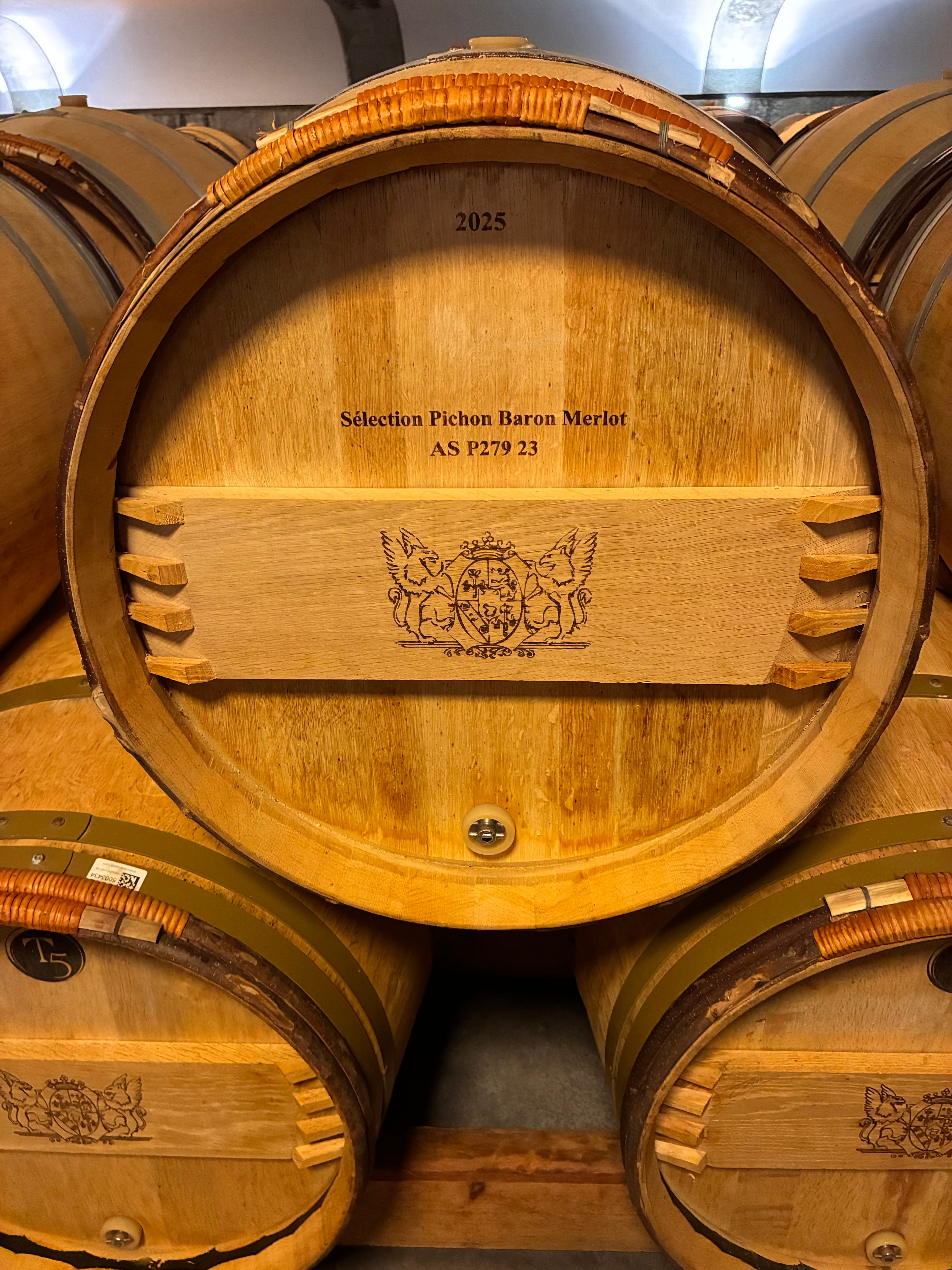
And Pierre points to the cellar too. “As for finesse, I think it comes down to how you manage extraction and fermentation temperatures. A cold maceration at the start also helps us, and we pay close attention to the length of maceration.”
Still Pauillac?
Will the grapes themselves have to change? “To some extent they already have”, says Pierre. “We have increased the proportion of Cabernet Sauvignon in our Grand Vin, between 80 and 85% today compared with 60-65% 30 years ago, which is very positive both for quality and for freshness. We still have full confidence in our long-established local grape varieties, especially Cabernet Sauvignon. There is no need to change them today, which means we keep the true character of Pauillac in our wines.”
Elsewhere in Bordeaux, some producers are trying lighter reds and making more dry white wine, a response both to the climate and to what drinkers want. Sauternes has a problem all of its own: its celebrated sweet wines depend on noble rot, a fungus called Botrytis that needs a delicate balance of autumn humidity and sunshine, which can be disrupted by erratic weather.
Bordeaux built its reputation on the idea that a particular place makes a particular wine. Climate change is now testing not just how Bordeaux grows its grapes but whether it can maintain that identity.
Pierre, for one, is bullish. “We now have new facilities in which to vinify Pichon Baron, and I am confident that we are keeping the Bordeaux style: fruit, freshness and great ageing potential. Even in the past, without today’s technical facilities or our current understanding of drought and heat, Pichon Baron 2003 turned out to be a beautiful wine that is still drinking very well today. Without any doubt, it is a wine from Bordeaux, not from the New World.”
Archived at: https://zenodo.org/records/23980409