
The bacterium behind the Kent meningococcal outbreak in March - which tragically killed two people - had acquired stretches of DNA from less harmful bacteria that normally inhabit the human throat, according to a recent news release from the UK Health Security Agency, UKHSA. Those borrowed genes seem to have made the bacterium unusually adept at causing severe disease. And, strangely enough, they may also explain why it then vanished.
To find out about the scientific detective work, from the moment the phone started ringing to report the outbreak in the Canterbury nightclub, I talked to Dr Charlene Rodrigues, who led the genomic side of the investigation as part of a big team from the UKHSA, the University of Oxford and a raft of university collaborators.
Three Hats
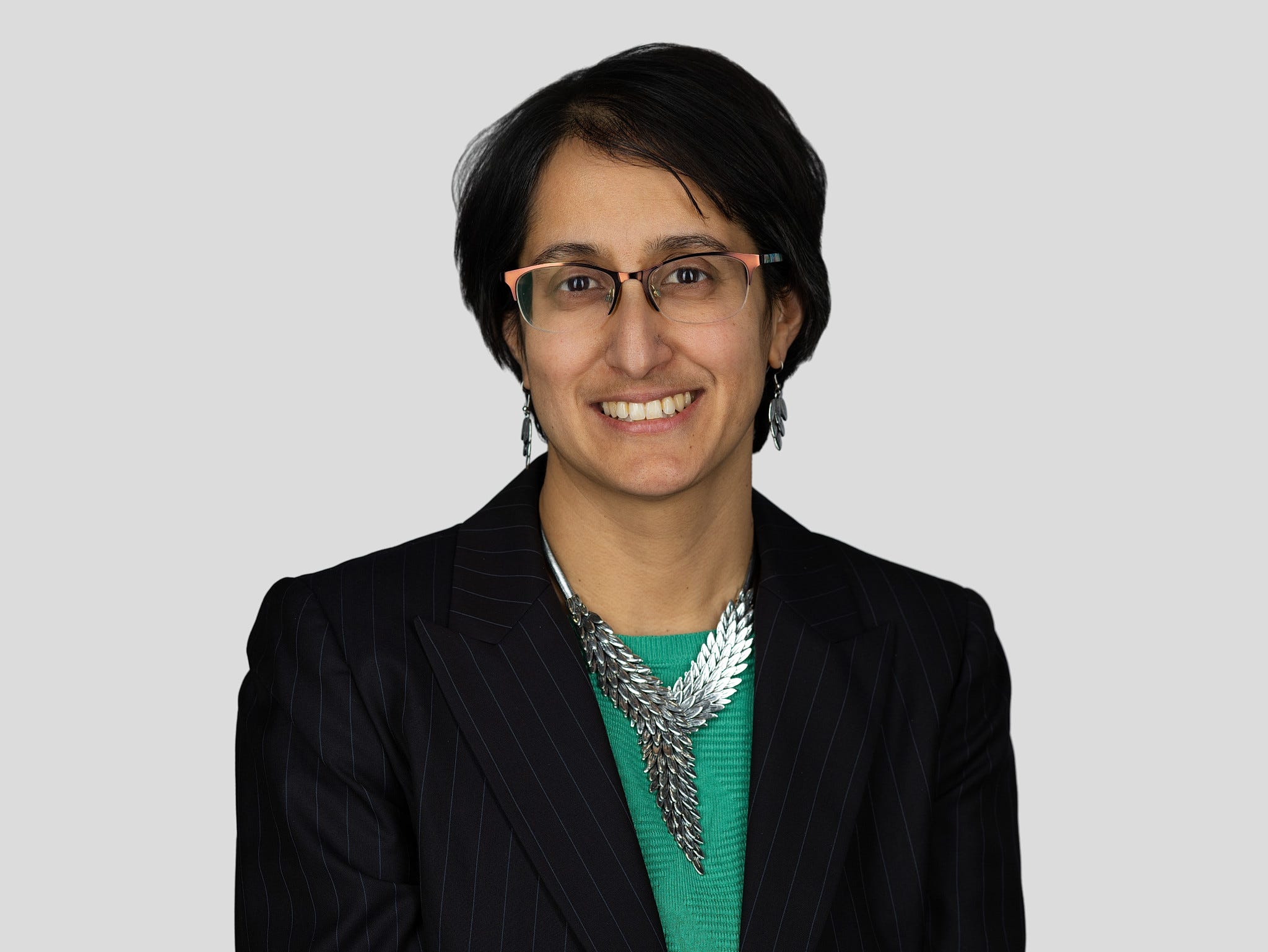
Charlene is a doctor, a paediatrician who specialises in infectious diseases at St Mary’s Hospital in west London, where she sees everyone from newborns to young adults. She’s also an academic, a clinical assistant professor at the London School of Hygiene & Tropical Medicine. She did her PhD at Oxford with Martin Maiden, based in the Department of Biology, and Christoph Tang, of the Dunn School, two of the biggest names in meningococcal research, then she moved to studying Klebsiella, a bug that kills newborns in low-income countries.
Her third role is at UKHSA, where she’s Consultant in Pathogen Genomics. She joined three years ago to tackle a very post-COVID question. The country built a vast sequencing operation during the pandemic to keep track of changes in the genetic recipe, or genome, of the COVID virus. Now that the pandemic is over, how do you make it earn its keep? “I work in the UK today trying to develop programmes that help us to use the sequencing capacity that we have to best impact health and disease prevention in the UK,” she said.
Then came a reminder that, though vaccines have done much to tame meningococcus, there are abrupt flare-ups of disease that can have deadly consequences. In March of this year came the outbreak and the response “ramped up very quickly.”
Friday Night
The outbreak was linked to a nightclub in Canterbury over the weekend of 5 to 7 March, when it was packed with students. Within a week, 21 of them had been diagnosed with invasive meningococcal disease. Everyone needed hospital treatment. Nine went into intensive care. Two died. By 23 March, the wider investigation had identified 23 confirmed or probable cases linked to the outbreak.
For UKHSA it began, as is often the case, at the least convenient moment, on Friday 13 March. “There was a large number of cases reported to the UKHSA as we entered the weekend, as is always the case.”
The standard public health machinery kicked in, tracing close contacts and getting antibiotics to them. But this number of cases, all at once, raised bigger questions. What were people exposed to? What were the risk factors? What on earth was going on? And, Charlene added, most worrying of all: “Is this going to get worse?” An outbreak affecting more than 20 people in a week “is a huge attack rate compared to most meningococcal outbreaks.”
The Sample’s Journey
The good news is that meningococcal disease is notifiable, which means a doctor who suspects a case is meant to pick up the phone to the UKHSA. In this outbreak, a patient who turned up looking sick had a blood sample taken, bacteria in the sample were grown in the lab, and that culture was sent to the UKHSA’s Meningococcal Reference Unit in Manchester.
There, specialists grew it up again, extracted its DNA and handed it to the Manchester Pathogen Sequencing Lab to be read. People imagine this happens in the blink of an eye. It doesn’t. “The bugs take time to grow, otherwise you can’t extract sufficient DNA.” That takes a day or two, sometimes longer, she explained.
What results is a genome, the entire genetic recipe of the organism, which is written in four chemical ‘letters’, C, G, A and T, numbering around two million in all in this case. “So you look at the Cs, the Gs, the As and the Ts, and you get a very long string or sentence. From that, we can extract useful information about the bacterium.”
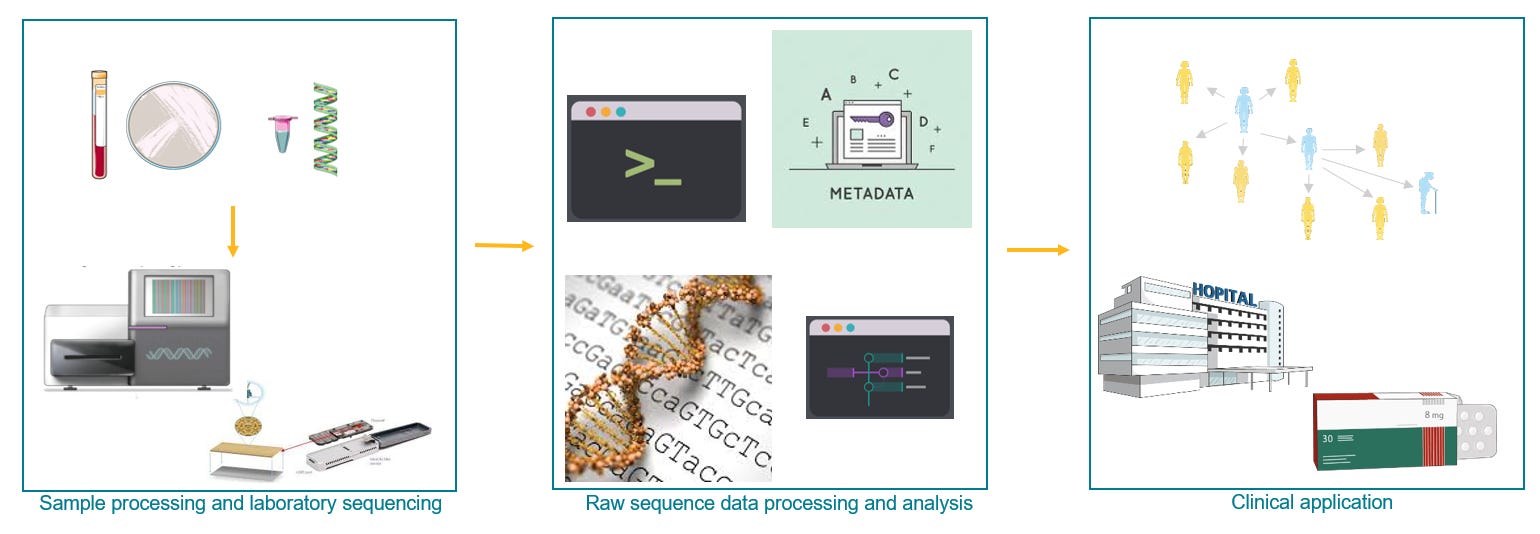
None of this was laid on specially for Kent. Every meningococcal culture in England has been whole-genome sequenced since 2010. Only about half of the reported cases grow in the lab (the rest are picked up by PCR, a technique which amplifies DNA that is present). That means that of roughly 300 cases last year, around 150 may have been sequenced. Thanks to this routine, unglamorous surveillance, the Kent bug could be read and contextualised within days.
Show Your Working
“The beauty is the speed with which you can compare the new genome with its relatives,” said Charlene. That first genome told the team they were dealing with a group B strain, and that it carried no antibiotic resistance genes. It also began to answer the questions everyone was asking, she explained, questions that COVID had drilled into all of us. Is it a new strain? Has it mutated? Has it come from abroad? Will vaccines work?
The UKHSA also put the sequence into the public domain straight away. “The reason for that was we wanted other experts to help us work on it, if it could affect important public health decisions.”
Saturday, In The Kitchen
I’ve been to many molecular biology labs and they all tend to look the same, with assorted boxes to amplify and study DNA, benches, stark lighting, freezers, plus an awful lot of pipettes. But Charlene breaks the white coat mould. She did her detective work at home in Ealing, on a laptop.
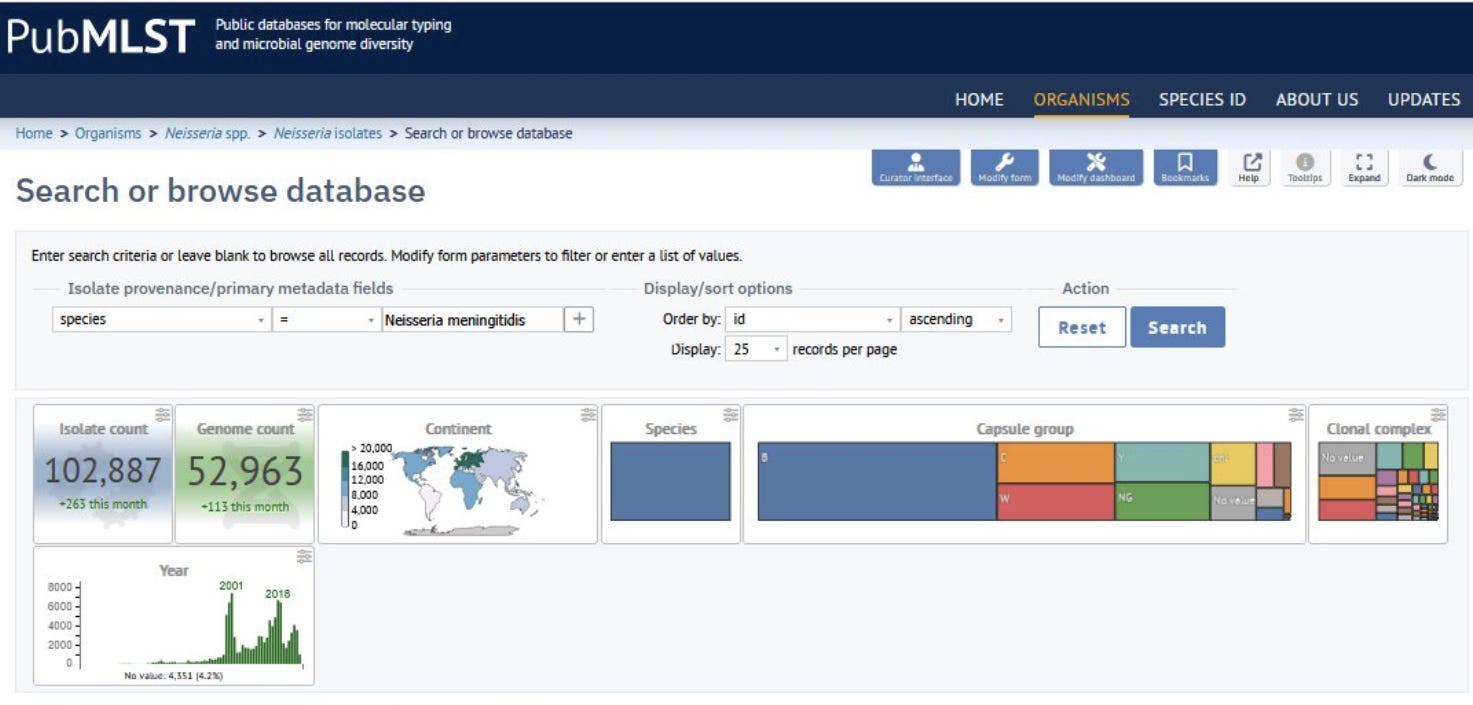
The key tool at her disposal is a database called PubMLST, the product of decades of investment in meningococcal research. It holds around 48,000 meningococcal genomes, cataloguing each of the bug’s roughly 3,200 genes and records which variant, or ‘allele’, every genome carries. “Some of these genes have like 50,000 alleles. This is no trivial task.” Importantly, this database is maintained by a global community of scientists, who diligently add new variants when they arise.
The database made all the difference, she said. “Should this have been a different bug, we may not have had such good information so quickly.”
Feed in a new genome and a tool called Genome Comparator lines it up against its relatives in the database, gene by gene. Same or different? Yes or no. She set the scan running on the Friday evening, went to bed, and woke up to be greeted by the answers. With the genome in the public domain, others, in particular Martin and Chris, were doing the same.
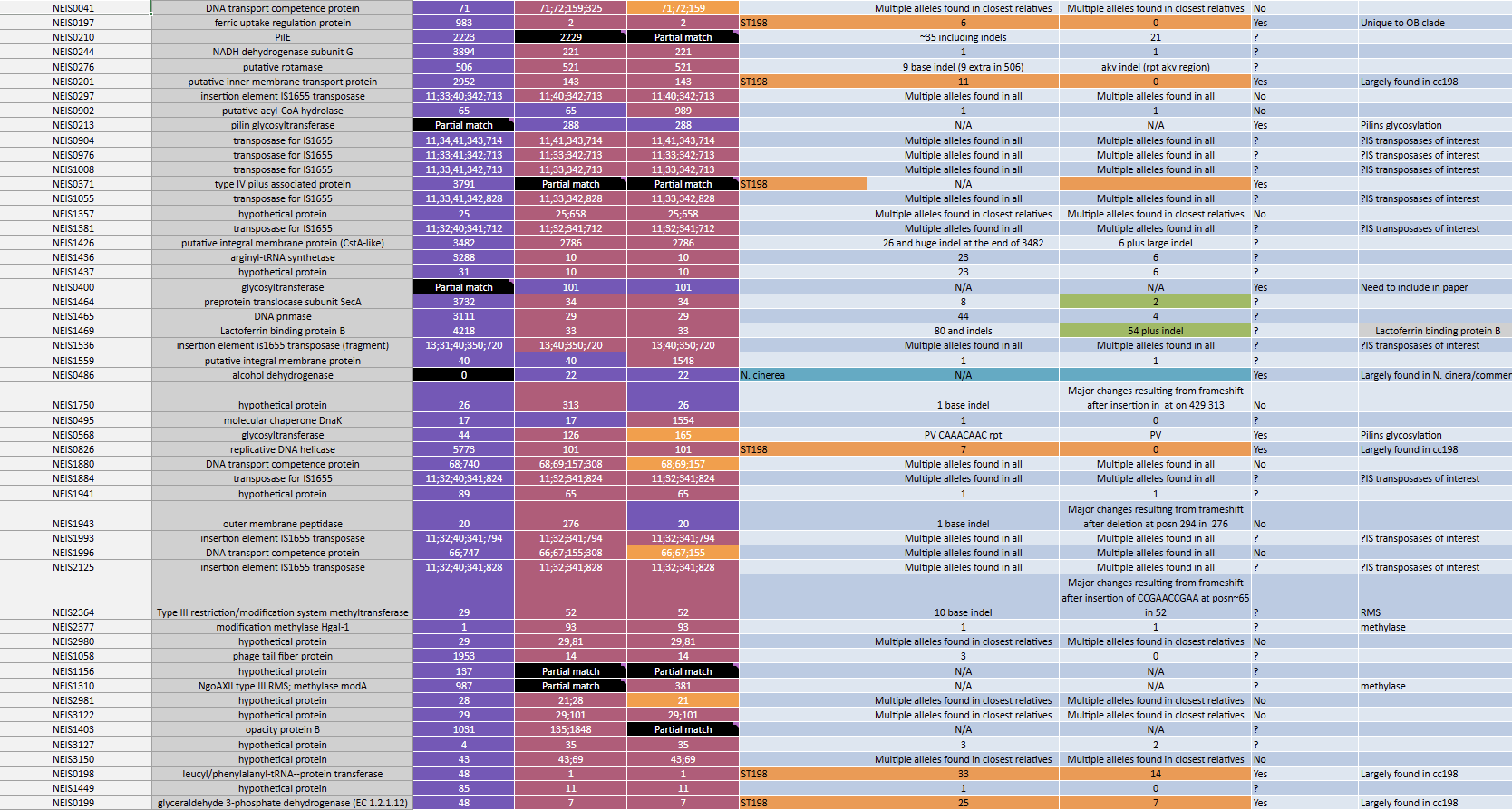
“On the Saturday morning I was in my kitchen again on my laptop talking to Martin Maiden, about the list of what we had found.”
That list held the genes that differed between the Kent strain and its closest known relatives, which had caused an outbreak back in 2022 to 2023. At that point the team had six genomes from Kent patients, which were virtually identical to each other, unsurprising maybe from a bug that had spread so fast. But compared with its close relatives or cousins, around 90 genes had changed.
Around 40 of those genes were in big gene recombination events, or horizontal gene transfer – they had been swapped and traded between other meningococci and others in the same family. “It is not in itself weird and unusual,” explained Charlene. “This happens all the time with many of the bugs that are living in our throat, on our skin, in our gut.”
Meningococcus lives harmlessly in the throats of about one in ten of us, alongside plenty of other bugs, and they trade genes all the time. “They’re all exchanging bits of DNA because they’re very friendly.” Most of the Kent strain’s borrowed DNA seems to have come from meningococci that normally just sit quietly in the throat, and from a harmless relative called Neisseria cinerea.
Her kitchen table was only the last link in a long chain of experts, from the clinicians who took the blood samples to the microbiologists and technicians in Manchester growing and sequencing the bug to the computational folk who ensure we can store, analyse and share the data we need. Science, she said, is a team sport.
Sunday, the Experts Pile In
A list of 90 genes means little without people who know precisely what each gene does. Each gene carries a name that describes the protein it makes, and veterans such as Martin Maiden, Christoph Tang and Ray Borrow at the reference unit could scan it to spot trouble. “This one’s been linked to invasion before.. This one’s involved in stickiness to other bacteria.”
On the Sunday afternoon, UKHSA convened a technical group of academics. One gene, pilX, caught the attention of Martin, Chris and Ray. It helps build the hair-like pili that bacteria use to cling on, and variants had turned up in huge outbreaks in Africa’s meningitis belt. Charlene remembers the mood well. “We don’t know yet the whole detail. We don’t know how different it is. But the fact that all these genes are different, and many have been well recognised as important for this bug’s interaction with humans - we need to look into it more. I was a bit worried.”
By the Monday morning, the first technical briefing was out. A targeted vaccination programme was already up and running by then.
What The Genome Did, And Didn’t, Do
Did those first frantic days of genomic analysis change the response of the authorities? Mostly, she explained, the genome backed up decisions that had already been made, as they always have to be, on the best judgement available at the time. The antibiotics being handed out would work. The bug was group B, and the MenB vaccine choice looked like the right one. Had either been wrong, the genome would have flagged it.
There was expert intuition in the mix, too. Martin Maiden, who’d seen this sort of thing before, was cautiously optimistic he knew the chances of the outbreak spreading more widely. “He said: “I think this is going to be like Southampton”.” He meant the 1997 outbreak at the University of Southampton, which flared up and then fizzled out.
But that cautious optimism doesn’t get you far when the number of cases is still climbing. “No one could really say, oh, okay, that’s fine then. Let’s all go and sit down and have a cup of tea.” As she put it, “the public health response has to be proportionate to the size of the threat and follow the evidence as far as you have it, because you don’t know when that curve is going up, whether it’s going to keep going to the sky, whether it’s going to turn around tomorrow.”
A week after that first Friday, Charlene was on the radio being asked whether the outbreak had peaked. “And the prudent response was, no, we cannot say that yet.” By the Monday or Tuesday after, however, the curve began to tip over. Martin’s cautious optimism was looking right.
Four In The Morning
Charlene’s working days were swallowed by communication: writing press lines, drafting technical assessments and briefings. The genome analysis had to happen outside regular working hours, so she got up at 4am and worked until 8, when she started her regular working day.
She sent a colleague a photo of her two screens full of genes. He texted back, baffled. She replied: “Early morning science going on here, analysing the outbreak genome”. He suggested she get some more screens.
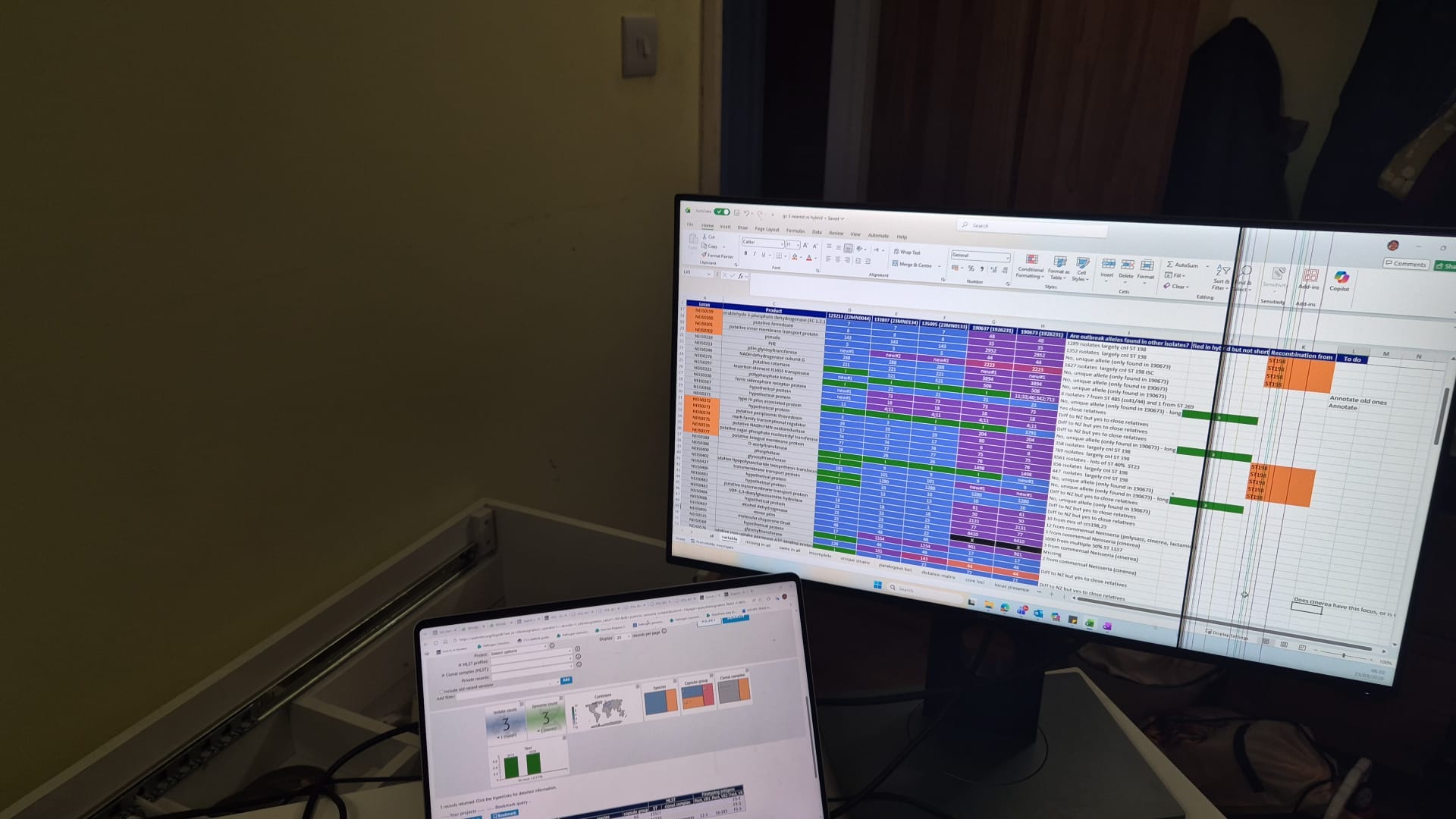
The collaboration snowballed, she added. “Meningococcal experts were working on their specialist area and we connected ourselves up.” Someone would say they knew a person who worked on a particular gene or protein of interest, and in they came: experts in Oxford, Leicester, Sheffield and Manchester, and researchers in the US who, as she put it, spend their whole careers thinking about a few of these important bacterial factors, notably PorA, important for vaccine immunity, or TbpA, which helps the bug steal iron from its human host to survive.
Ninety-Two Genes
Then came the slow part of the research. Checking, rechecking, bringing in the right expertise, getting the rigour right. The final tally of genes that differed in the outbreak strain was 92. “I know this because I’ve checked and counted and recounted and double checked a million times,” she told me.
Of those, 40 genes arrived in eight separate chunks through horizontal gene transfer, bacteria swapping bits of DNA.
Three of the eight transfers involved iron. That matters because the throat is the bug’s home, while the bloodstream is hostile territory because iron is hard to come by. “So it scavenges iron to survive in the blood. In other words, if you’ve got genes and proteins that are better at scavenging iron, you will survive better if you accidentally get in the blood.”
Three more genes involved pili, those sticky protrusions on the exterior of the bacterium. Whether the Kent strain ended up stickier or less sticky, nobody yet knows, and either could spell trouble. “But, because if they’re less sticky, maybe they can go from me to the person I’m kissing in the club more easily. If they’re more sticky, maybe they stick on better and invade through the mucosa of my throat into my blood better. I don’t know.” “It’s a Goldilocks problem,” she said. “You’ve got to be the right level of stickiness not to cause disease and still circulate.”
No Plan, No Plot
Evolution has no foresight. The bacteria did not acquire these genes in order to attack us: random genetic changes were filtered by whatever helped them survive and spread. “There is no evolutionary advantage of causing disease,” she said. “Because if you make me sick, I’m going to take antibiotics and the bug dies. Or if you make me too sick, I die, in which case you die with me.”
It’s down to luck. Bad luck. “People think they evolve to evade us, but they don’t really. They’re just acquiring a random combination of genes.” In Kent, that random combination, in the wrong place on the wrong weekend, turned a familiar throat bug into a killer. “Those poor people in that club that night, the meningococcus had a particular combination of bad genes, probably, that made that bug better at invading, maybe better at transmitting, and better at surviving in the blood.”
Why Kent?
The epidemiology of the outbreak isn’t surprising. After babies and toddlers, teenagers and young adults are at the highest risk, because they carry the bug mostly in their throats and do the things that spread it. With around 1,800 people in the club, she said, “It depended obviously who is sharing respiratory secretions with who, who’s kissing who, who’s sharing drinks, and who’s sharing vapes.”
But that’s true of every club. “There were clubs in every city of the country that weekend. No one else had this problem. So it does imply that there was a bug problem, not just a host and an environment problem, though those may have led to the scale of the outbreak.”
England sees about 300 cases a year, most of which are sporadic, occurring one unlucky person at a time. Kent produced 21 in a single week. The genetics point to an unusually invasive strain, though she’s careful to stress that’s what the DNA suggests: it takes laborious follow up studies in the lab to confirm this
Here today, Gone Tomorrow
The team looked back at similar ‘focal’ outbreaks in the 1990s, in Cardiff, Rotherham and Southampton, where a handful of people fell ill after a party or a night out. None were as big as Kent. But in each case, the strain was never seen again. The team’s explanation is that these strains are simply too vicious for their own good. “So the hypothesis is that they’re just too invasive to survive spreading from one person to another under the radar, if you like.”
A bug that makes almost everyone it settles in seriously ill can’t spread quietly. Six months on, the Kent strain hasn’t turned up again in the UK. The only sighting since was a case in Austria, close in time to the outbreak, of a virtually identical strain.
Could It Happen Again?
Yes, but nobody can tell you when. “It reminds us that outbreaks are unpredictable,” she explains. Gene swapping in our throats is random and we can’t evict these bugs, which may well do us good in ways we don’t yet fully understand.
All we can do is maintain surveillance and use vaccination intelligently. Following the outbreak, the government launched a one-off, time-limited MenB vaccination programme for eligible young people in 2026. The Joint Committee on Vaccination and Immunisation, JCVI, has also recommended a future routine programme at around age 15: one dose for those primed by vaccination in infancy and two for adolescents who were not. The recommendation is now being considered by government. When it comes to university freshers, she’s refreshingly blunt. “You stick your arm out, you get your vaccine and you know you have done your best to protect yourself.”
What Next?
The preprint is a beginning, not an end. To find out what the altered proteins actually did in the outbreak strain needs lab work, which has already started. But doing these ‘phenotypic assays’ is hard. Meningococcus only infects humans, so there are no good animal models, and a cold plastic tube is a poor stand-in for a warm blood vessel. “Growing an organism on a plate and then putting it into a tube and seeing whether it kills blood cells is not the same as real life.”
I also wondered whether genomics might lead to new drugs for meningococcal sepsis, which is terrifyingly rapid. Not any time soon, she said. Antibiotics kill the bug, but much of the damage comes from the body’s own runaway inflammation, and a career’s worth of trials at St Mary’s intensive care unit hasn’t found anything that reliably tames it. “Unfortunately, we don’t have anything.”
The paper is ‘Emergence of short-lived meningococci causing focal epidemics can be associated with gene transfer from carriage-associated Neisseria’, a bioRxiv preprint (September 2026) from UKHSA, the University of Oxford and collaborators. The account of the outbreak itself is in I’Anson et al., Eurosurveillance 31(15), 2026.
Anyone worried about symptoms of meningitis or sepsis - which can include fever, headache, stiff neck, sensitivity to light, a rash that doesn’t fade under pressure, difficulty breathing and muscle pain - should seek medical help immediately.
Small World
At the end of our chat, Charlene admitted she’d been puzzling over my first email. “I was saying to my husband, I wonder if it is the same Roger Highfield that used to write for The Daily Telegraph.”
It turns out her father, an engineer who loved science, read the Telegraph when she was a girl. He’d tear out articles, particularly about the cloning of Dolly the sheep or the Human Genome Project, and leave them on her desk, which is how my name kept cropping up.
And there was more. Her brother won The Daily Telegraph Young Science Writer award in 2008 with a piece on precision medicine for cancer, and had dinner with me and David Attenborough, one of my fellow judges. I ran that competition for about two decades and its winners have gone on to become some of the finest science writers around. I’ll admit to feeling a little smug.
Archived at: https://zenodo.org/records/23925090