
Machines can now churn out plausible nonsense faster than any human can check it. Which is why I found it reassuring, earlier this week, to watch 13 young people rewarded for going the old, slow way around: weighing the evidence, asking awkward questions and writing down only what stands up.
I compèred the latest young science writer awards at the Science Museum on Wednesday, along with my old chum Pallab Ghosh, the BBC’s science correspondent. After the ceremony in a room filled with teenagers, parents, teachers, judges and hacks, we both felt more cheerful about the future of evidence-based reporting in the face of AI slop, spin and fake news.


I don’t need persuading that an early prize can change the course of a life. I have been involved in the MRC Max Perutz award for PhD students for years. For decades I ran The Daily Telegraph’s Young Science Writer competition, which was remarkably good at spotting talent. Ian Sample is now at the Guardian. Ed Yong, who won in 2007, went on to a Pulitzer for his pandemic reporting. Francesca Happé became a distinguished professor, and there were plenty more besides (David Bradley, Kate Ravilious, Bob Ward, Lewis Dartnell, Anjana Ahuja … the list goes on).
But too many of our younger entries came from independent and fee-paying schools, so there was always a worry we were rewarding the schools with the time, staff, and contacts to motivate pupils, rather than finding the young people who’d benefit most.
That’s what makes the latest award different. Alex and Jeff O’Brien founded the award, and still fund it, for 14- to 16-year-olds in state-funded, non-selective schools across the UK. The Association of British Science Writers, ABSW, of which I’m honorary president and Alex is Chair, sees it as a great way to engage with young people and build a thriving community.


Over the past five years, the ABSW Young Science Writer Award has drawn around 1,200 entries from more than fifty towns and cities, and since 2023 from all four nations.
The subjects tackled by earlier winners were as diverse as they were inspiring. Zara Hussan asked whether fungi could help with the climate crisis. Richael Forson explored cocoa farming through her own family’s farm in Ghana. Jasmin Notarangelo weighed up the promise and practical limits of insulin pumps. Hasset Kifle asked whether so-called super shoes are really that super.
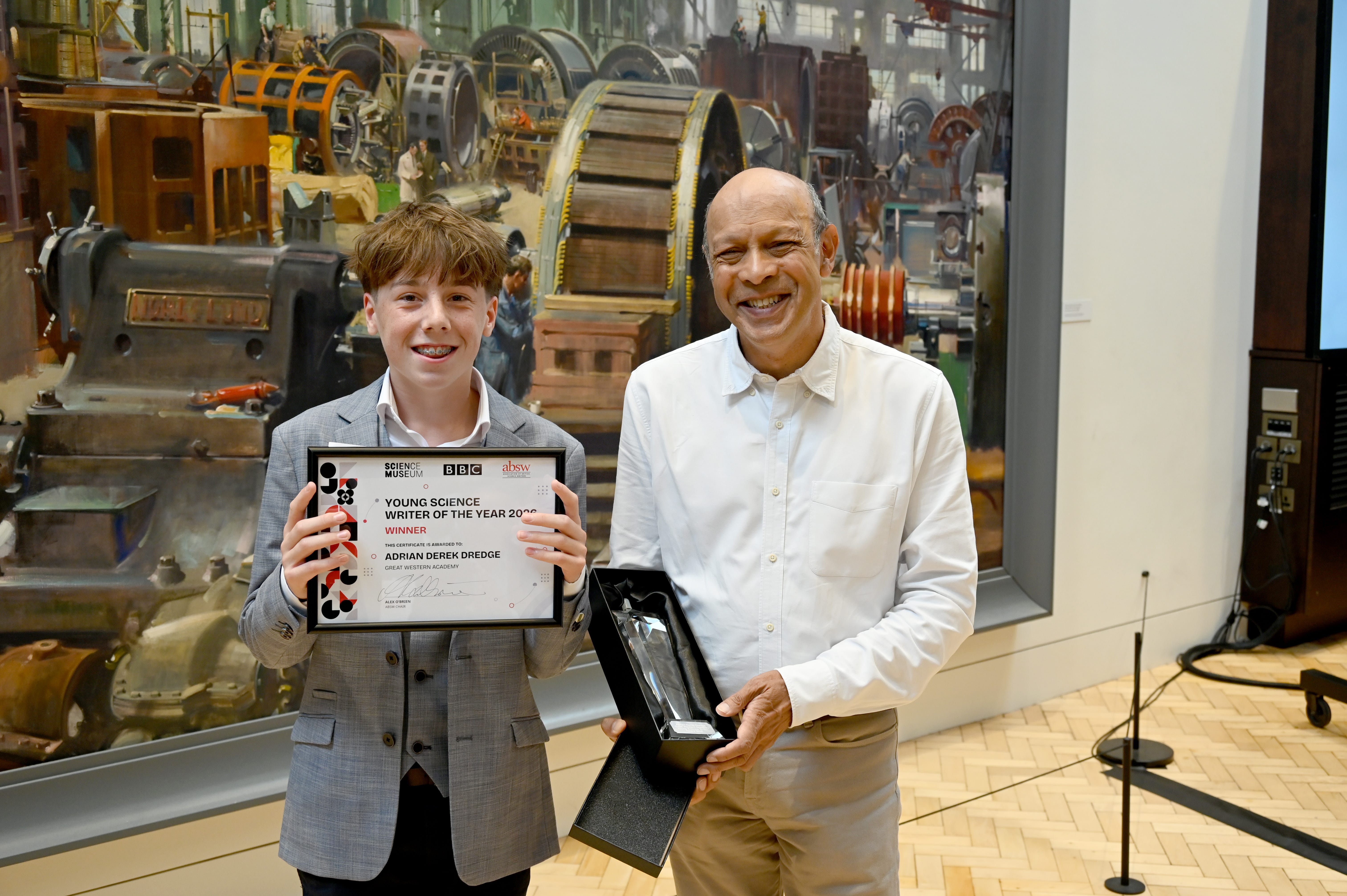
This year’s crop of topics was every bit as wide-ranging. Adrian Dredge took the top prize and read out his essay, The Digital Mapmaker, to the throng. It’s a forensic look at where AI falls short and why so much hangs on what it’s trained on, and Pallab tells me that it will be published online by the BBC. Poppy Marchant was runner-up for her piece on the secret world of whales, and Ralph Sealey for his on prostate cancer in Black men.


Ten more writers were Highly Commended, on subjects from weight-loss drugs and stem-cell treatments for diabetes to the link between the gut and Parkinson’s: Yavindi Singappuli Arachchilage, Madeleine Chesher, Kathryn Elloway, Evie Howard, Eva O’Neill, James Reed, Saatchi Shah, Tzvia Tabor, Blake Thomson and Albert Watson. The full list of winners is here.
We also heard from the materials scientist and comedian Dr Anna Ploszajski on why science needs stories. She wrote her doctoral thesis as a narrative and, gratifyingly, it passed with no corrections. Dr Khalil Thirlaway, who began his science communication career at the Science Museum, spoke about the power and responsibility that come with the job. To round things off, we had bubbles, liquid nitrogen and more from Chi Wing Man, my colleague and Senior Explainer.


People make life-changing decisions on the strength of what they read, whether about treatments, diets, pensions, or national policy. And AI is churning out news that attracts eyeballs but isn’t necessarily true. Somebody still has to sort what stands up from what doesn’t, and say so clearly.
Not every finalist will become a journalist. As I found over the years, some will be scientists, clinicians, engineers, filmmakers, or teachers. Some will do jobs that don’t have names yet, perhaps because AI conjured them up moments before making others obsolete. But curiosity, honesty, respect for evidence and the nerve to ask an expert a tricky or embarrassing question will serve them well, wherever they end up.
We owe a huge debt to many. A teacher spots ability, finds room to encourage pupils to enter in a crowded year and nags for another draft. So, thank you to the teachers, along with the families, the judges, the ABSW board and the award supporters: the BBC, Science Museum, DK, STAEDTLER, the Royal Institution and Raspberry Pi. And, of course, congratulations to all the winners.
Next year the competition is set to grow even bigger. The World Conference of Science Journalists comes to Central Hall Westminster in September 2027, so our next crop of finalists will join activities alongside science reporters from across the globe.
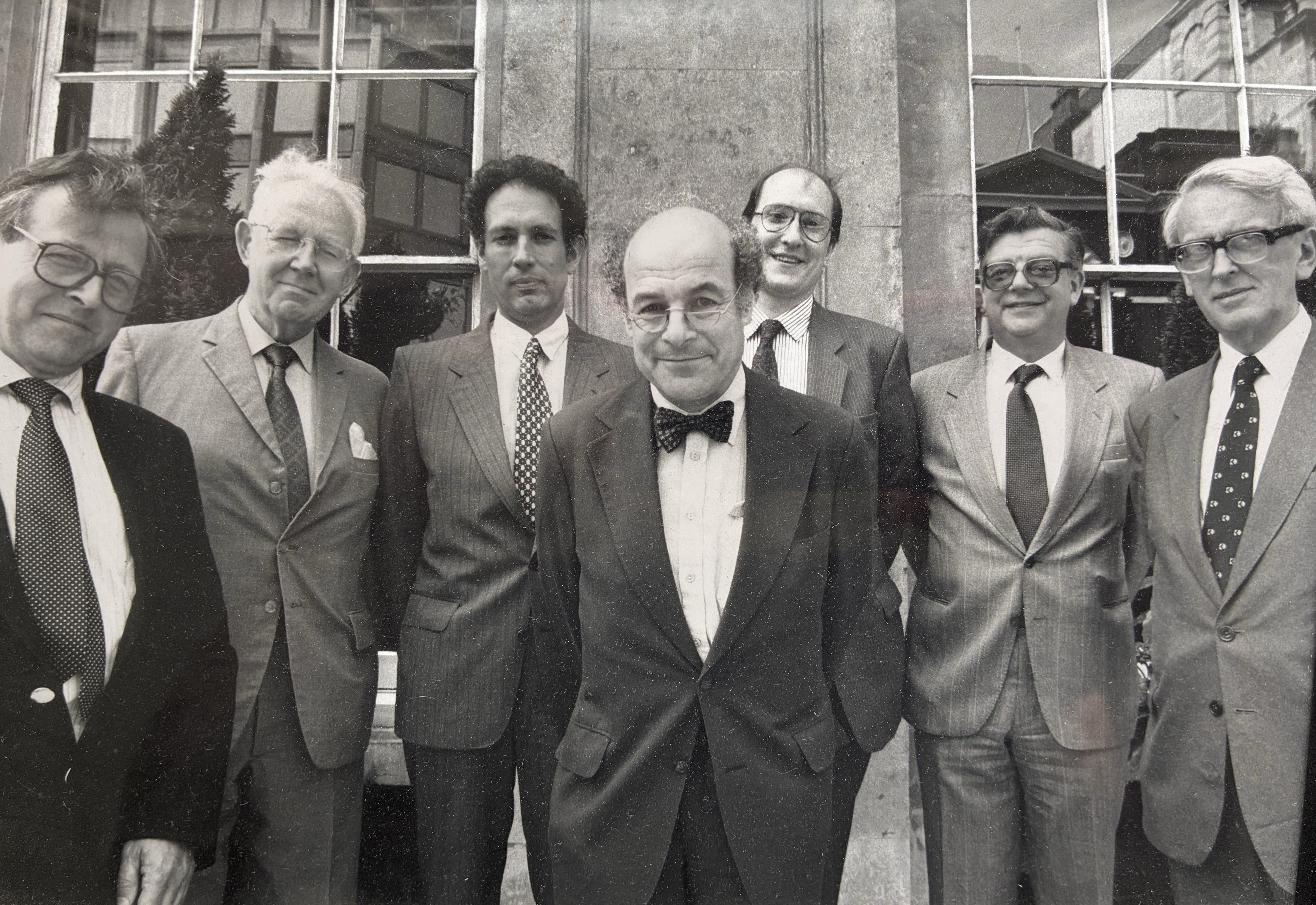
One last thing has changed, and it’s visible in the old photograph below. Here’s what I think is a 1980s vintage Daily Telegraph judging panel: Dick Fifield of New Scientist, Sir Sam Edwards, Peter Newmark of Nature, Heinz Wolff, yours truly, Sir Walter Bodmer and Sir David Phillips. Plenty of others helped me to judge the competition over the decades, notably David Attenborough and, to dilute all those Y chromosomes, Mary Archer. The contrast with today’s diverse ABSW panel of judges could hardly be greater.
Images: Mark Lewis/ABSW/The Daily Telegraph
Some will do jobs that don’t have names yet👍