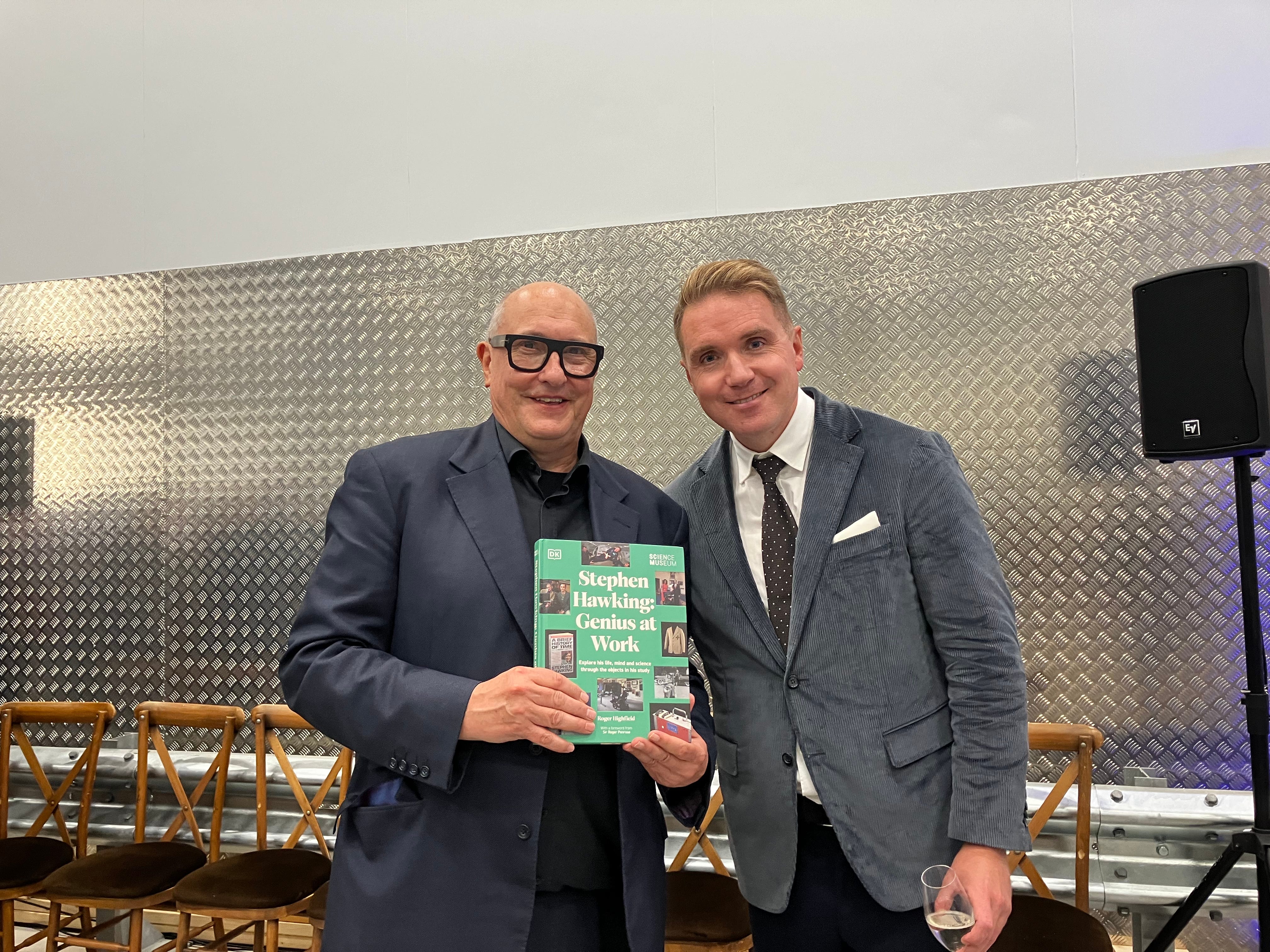
Graham Farmelo made his name with The Strangest Man, his award-winning biography of Paul Dirac. Now he’s turned his attention to Stephen Hawking, and we have seen the first highly starred reviews of his book, which is published in the UK today. The authorised biography, Hawking: His Life and Work, took Graham six years and, by his own estimate, demanded well over ten times the documentary material he had to work with when researching Dirac. “It practically broke me,” he told me.
RH: Was there a letter, notebook, archive or recording that felt like buried treasure the moment you opened it?
GF: Definitely: Stephen’s sister, Mary, gave me access to her father’s journals. Initially, I thought they might be dull as Frank was not the most exciting person. I waited through the COVID pandemic to get access to them in Yorkshire only to find that half of them were written in a Greek code. When I did succeed in cracking the code, I found an absolutely no-holds-barred account of what was happening in Stephen’s life.
There was the Christmas when Stephen came home from Cambridge, and slipped on a frozen lake in St Albans, which marked the boundary between his early, normal life, and the rise of his motor neuron disease. I know exactly when the accident occurred. It was about 2.30 in the afternoon of Friday 28 December 1962, when he and mother went ice-skating on the frozen-over lake at Verulamium, near his home in St Albans. She noticed that he couldn’t even tie up the laces on his skates and saw him fall over soon after he was on the lake and couldn’t get up. That level of detail is in Frank’s journals. You learn how he frogmarched Stephen to the local GP a few hours later, then took him to a leading neurologist in London. Stephen seemed unperturbed but Frank was shattered, bursting into tears as strangers entered the room after hearing that Stephen almost certainly had motor neuron disease.
Because it was a rare disease, and he was not a neurologist, Frank consulted the medical textbooks. After he discovered what lay ahead for Stephen, and how he was likely to die within three years, he hid them from his wife because the prognosis was so terrible. His father became, as Stephen said later, his private doctor and took Stephen to two of the best neurologists in Britain. And it’s just horrible to see the collapse of their happy and contented family life as they see the prospect of their golden son dying. The journals reveal the devastation in the family. Frank begins one diary entry in January 1963, ‘Damn! Damn! Damn! We had hoped so much from and for Stephen and had taken it all almost for granted.’
Frank kept that diary from about mid 1920s until his own death in the 1980s, where Stephen features heavily. I don’t know of another case, though there probably is one somewhere, of a first-rate scientist where you knew what he or she was doing from birth in such detail.
RH: What was the single hardest fact in the book to nail down, and how long did it take?
GF: Stephen said that when he was in hospital being tested for MND, he saw a boy die before his eyes from leukaemia. That image stayed with Stephen, as he saw someone younger than himself cruelly scythed down. Nobody has ever revealed his name but, with the help of a clue from Stephen’s younger sister, who thought his surname sounded like Pike, my brilliant lead researcher Tabitha Siklos tracked him down. She went through death notices and found it was Jeremy Pryke. ‘Whenever I feel inclined to feel sorry for myself,’ Stephen later wrote, ‘I remember that boy.’
RH: Were there other forgotten figures in his early life?
GF: There was another, neglected yet important, young influence. Stephen’s short last memoir mentioned another boy that he played with in Highgate. He remembered his name was Howard but couldn’t remember his last name. We found that this close chum, a few months older, was Howard Hollings, and unlike other friends he was interested in boxing, in football, in popular music, when the Hawkings were into opera, Shakespeare, what have you. Howard gave Stephen an introduction to popular culture. But it was terrible when I eventually contacted Howard’s wife. I asked if he had met Stephen in adult life. She said they had lived in Switzerland but, before Stephen managed to visit, Howard had died – and of motor neuron disease – in 1983.
RH: it true that Stephen Hawking was sometimes slow to give credit to other researchers?’
GF: Yes, this has long been commented on in the community of physics researchers, for example in Bill Press’s memoir More than Curious. l have identified some examples. By the way, it is something of a mystery why someone as brilliant as Stephen would do this.
RH: After all these years inside his world, what still baffles you about Stephen Hawking?
GF: How he proved so very wrong the predictions of his neurologists for how long he was likely to live. They thought that he would probably be dead by 1967 and would be lucky to finish his PhD.
No less remarkable, in my view, is that he had such a brilliant career in physics despite his disability. In 1963, when he received his diagnosis, he was studying a very difficult subject, classical general relativity, when he was gradually losing the ability to write things down. By 1975, when he was at Caltech, he could barely write at all.
Yet Stephen did his greatest work around that time, showing that a black hole radiates what we now call Hawking radiation, when he combined quantum mechanics with Einstein’s general theory of relativity. His brilliant calculation, begun in late 1973, showed that that black holes are not entirely black. He did that calculation, as far as I can see, in about three or four weeks as a result. Yet it took a good nine months before the best people pretty well all agreed that he was right, being such an incredibly difficult calculation . I am still amazed by this achievement, and I am by no means alone.
RH: Which of his results do other physicists rate highest, and is it the one the world knows?
GF: Remember, he did a lot more than the black hole radiation paper. He got to be a Fellow of the Royal Society before he did that calculation. That’s amazing. Knockers often ask what else did Stephen do? He got his FRS for the singularity theorems that he developed with Roger Penrose, that’s what. These are the mathematical rules that prove that black holes are a natural consequence of Einstein’s general relativity, the theory of gravity that superseded Newton’s.
Equally, it has to be said that Stephen’s black hole radiation paper of 1974 was transformative. Martin Rees, his friend who became Astronomer Royal, read it and it left him shaking, saying everything has changed - it really was that radical. This was the first clear prediction in the subject usually called quantum gravity, the holy grail of fundamental physics.
The following summer Stephen went to Caltech and then by sheer, relentless analytical thought realised that there was a real problem with information in the black hole: where does it go? And it took almost a year for his paper about this problem to be accepted. Even today, that work is still not finished. That was a truly glorious period for him – he was at the very top of his game.
RH: Some physicists say privately that Hawking was overrated, partly because people were so amazed that he could do research when so disabled. Do you think that is fair?
GF No. I remember when I was doing research in particle physics that I often heard people say Hawking was overrated, but those people knew very little about gravitational physics. Broadly speaking, the theoretical research in fundamental was split between people who were experts in subatomic forces and experts in gravitation. During my research on the book, I got to know much more about gravitational physics and came to understand much better why Stephen Hawking was and is rated so highly by his peers.
RH: Where do you think he was just simply wrong, and does that matter?
GF: When it comes to the arrow of time, Stephen pushed things just a bit too far. He talked about the arrow of time reversing in cosmology. And his students warned him it was wrong. In the end, he did admit it. His most famous error is that he thought that the Higgs boson would never be found. Peter Higgs himself told me Stephen’s reasoning was ‘total crap.’ I said: “Peter, do you mind if I record this?” Back came the reply: “No, I insist you record this.” But to be fair, part of Stephen’s character was he liked to go big. Occasionally he got over excited, and he did this more than I think you could say most really good scientists. But, on the other hand, that was the way Stephen worked: since he began as a PhD student, he was determined to make radical contributions to his subject.
RH: Do we badly underestimate how ambitious he was?
GF: If you think Stephen Hawking was extremely competitive and ambitious, you’re right. He was competitive with his sister, even when playing draughts. When she started to come near beating him, he moved on to chess so he could keep on winning. With his own little boy, Tim, he was incredibly competitive. He regarded Roger Penrose as fearsomely good. And remember, it was Roger who showed mathematically that a singularity must be formed after the complete collapse of sufficiently heavy star is a robust prediction of general relativity. This put what were later known as black holes on a firm footing and earned him a Nobel prize. Stephen wanted to be even better, make no mistake. He was very much driven by the need to be number one.
RH: You’ve written that outsiders don’t really grasp the culture and demands of fundamental theoretical physics. What do they get wrong?
GF: You need the courage to investigate promising theoretical ideas when the experimental evidence is very thin. When Stephen decided he was going to go into black holes, it was at a time when many of his peers greeted the idea of them with a smirk. A black hole was the Loch Ness Monster of cosmology. At that time, it really was the case that people did not know whether these things existed. Steven Weinberg, who is the subject of my next biography, just flatly thought that we’re never going to see these things. Even Kip Thorne, Stephen’s great friend who is today a Nobelist, said I’m going to go and do something else. But Stephen had no fear. It was he and a few other colleagues who laid the foundations of that theory of black holes.
RH: You’ve lived with both Dirac and Hawking now. Is there some bigger message about the nature of physics, or what physics rewards, which comes out of studying both these men?
GF: They worth extremely hard and were very creative. And fearless. They had a very clear vision of what they were doing, and they worked on an abstract vision, always with an eye to experimental test.
The reason why we revere Dirac and Einstein is they were the architects of the great fundamental theories of the of the 20th century. What Hawking did brilliantly was to develop the theory of black holes and, in particular, demonstrate the importance of bringing quantum mechanics into the story.
Hawking thought Einstein was top but then came Dirac. And then came the other creators of quantum mechanics. He said, if I’m just below them, I’m quite happy with that.
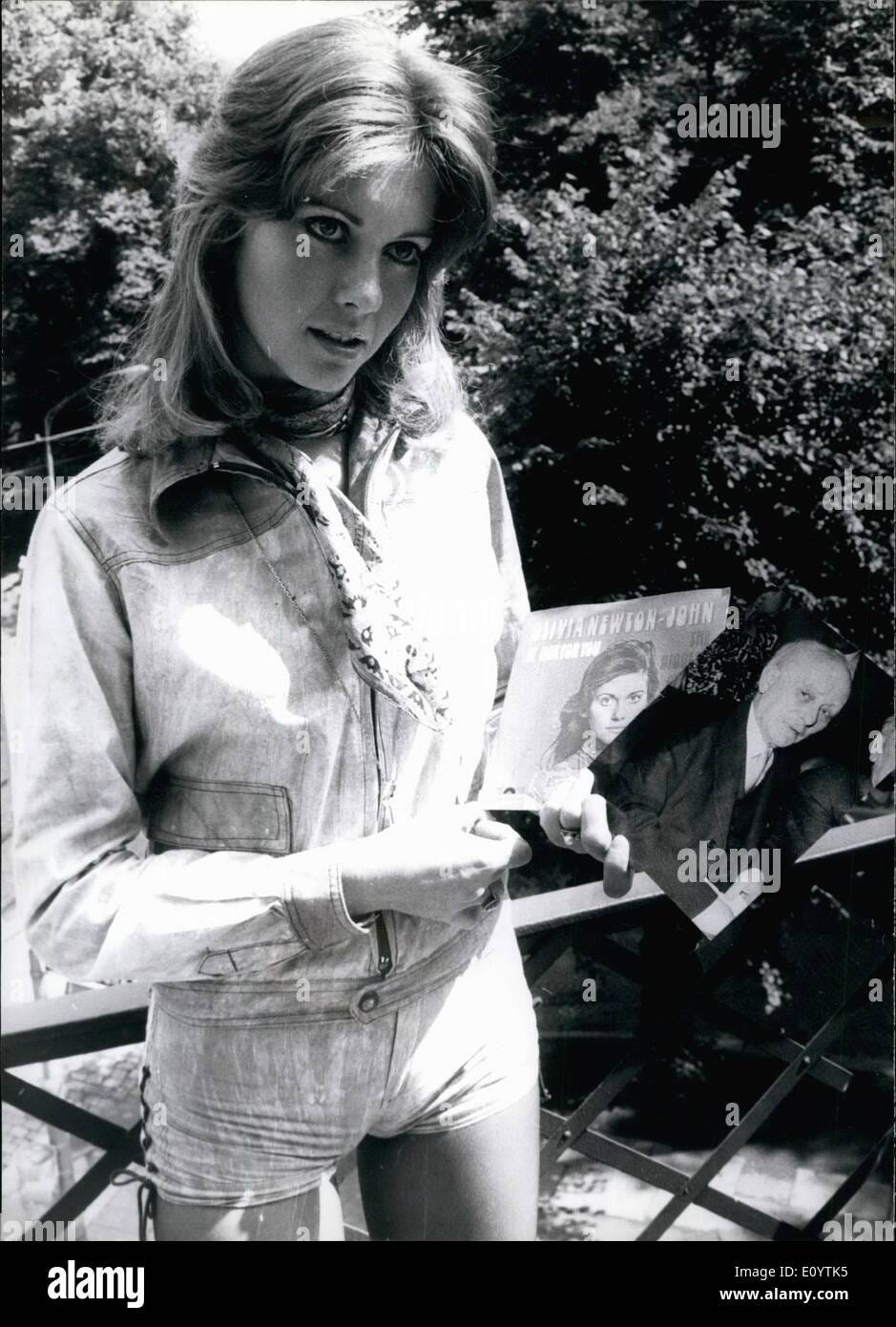
Dirac was a huge admirer of Stephen and so he went round for afternoon tea with him in Cambridge on a quiet Sunday in August 1977. During the conversation Dirac remarked, did you know that the actress singer Olivia Newton-John was Max Born’s granddaughter? Stephen did not. This was a bit of a conversation stopper, and they said little after that.
RH: Should he have won a Nobel prize?
You could say it was a tragedy Stephen died just before we got the first images of black holes. That underlines a big worry about the nature of science. For example, Peter Higgs waited half a century for his particle to be found by the Large Hadron Collider, earning the Nobel prize in 2013. Stephen missed experimental confirmation of his black hole radiation idea in his lifetime. There is a possible crisis in theoretical physics where some predictions cannot be checked for 50 years, 100 years and so on. Physics is done by human beings who want a reward in their own lifetime.
RH: Hawking worked alongside Nobelists Penrose, Thorne and Weinberg. What set him apart from them?
GF: His ability to visualise problems. And how stubborn he was. Several people told me he had lots of qualities, but the key one was stubbornness. He was absolutely determined, as his mother put it, to squeeze the last drop out of everything in life. He wrote to Jacqueline Du Pré , when he heard that she had been diagnosed with MS, and how that had stopped her legendary cello career. And he tells her you must not feel sorry for yourself. If you do that, you’re going to sink and nobody’s going to be interested in you. There’s a lot of simple wisdom in that. He was pragmatic, too. When he was talking about how to cope with MND, he chose Gonville and Caius college because they offered the most generous stipends. He knew he would need money to cope with his motor neurone disease.
Another example of his stubbornness involves his determination to up his mathematical game. When he realised that Roger Penrose relied on modern mathematics, such as topology and algebraic geometry, Stephen attended the most difficult mathematics lectures at nine o’clock in the morning, when he was not normally up, to catch up. He worked through those lectures. He became a teacher of part three in mathematics. And he forced himself to go from a potentially good mathematician to someone who was adept at using advanced pure mathematics as a tool in theoretical physics.
There were people like Michael Atiyah, who won the Fields medal and Abel prize, who said mathematics was no more difficult than breathing. But Hawking wasn’t like that. Atiyah himself said Stephen was not a great mathematician but really understood how to apply maths. He struggled, but he conquered it, despite his declining health. I really admire that.
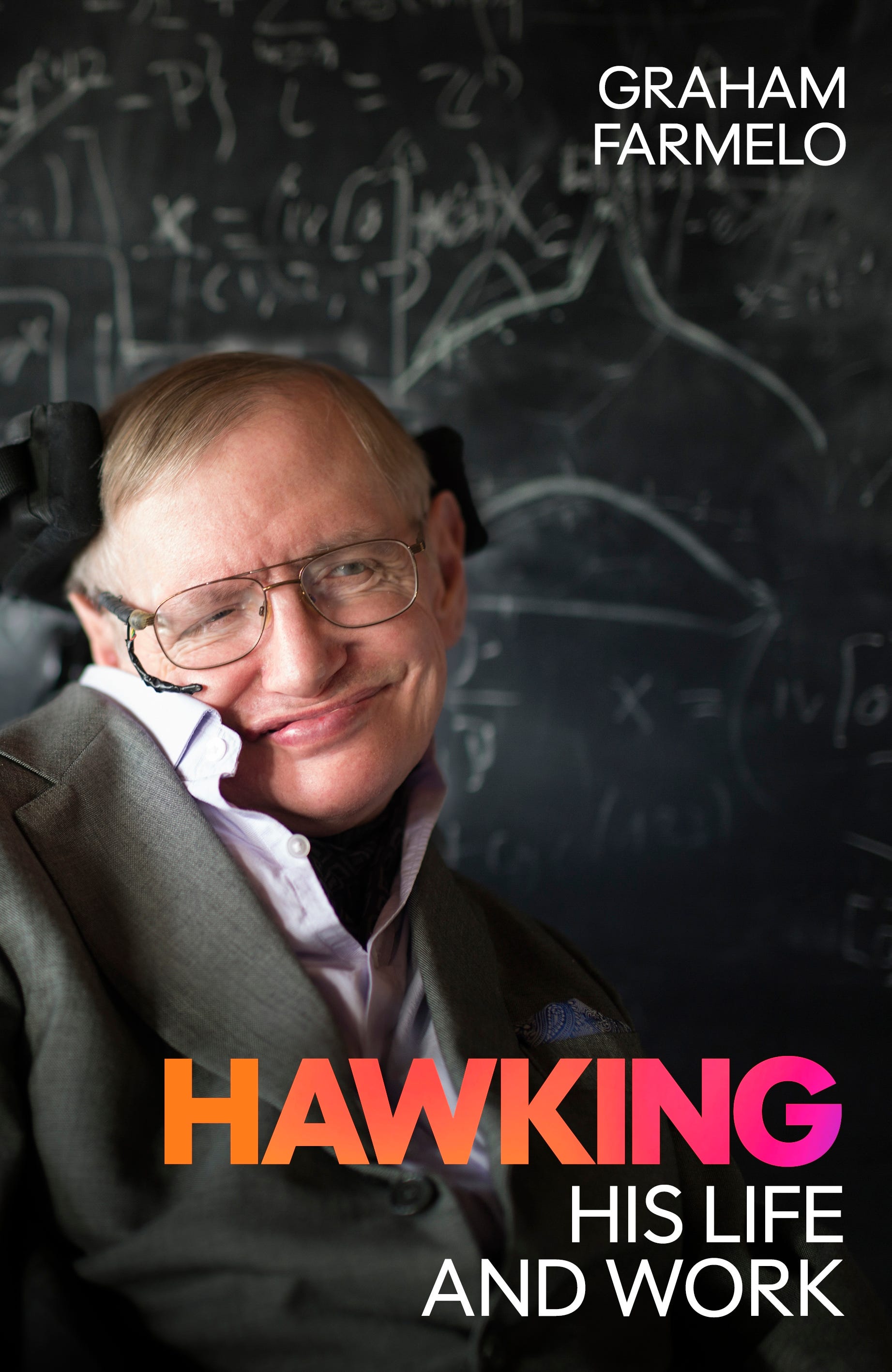
RH: Looking around your own office, which object best captures the way that you think? (When I wrote Stephen Hawking: Genius at Work, I went through Hawking’s life by the objects he kept in his office and came away convinced that stuff can reveal things biography misses.)
GF: My computer. When I wrote Dirac, I was surrounded by a pile of books, and I could never find anything. I had thousands of photocopied pages too and, when I got the Hawking project I thought I can’t go through that again. I ‘ve been labelling images and forming a gigantic electronic bibliography It’s taken me years, to do. But it means all my reference and documents are stored and readily searchable. For my next project, I’m hoping to use AI, unless of course it writes the book before I do.
Hawking: His Life and Work by Graham Farmelo is published by John Murray (£30) on 24th September.
You can also read my ‘minute with Graham Farmelo’ interview here.