Picture an embryologist, a patient and a tiny cluster of human cells. Now add an AI that ranks that cluster by the odds of it becoming a baby. Who do you trust, human or machine?
That question ran through many of the entries to this year's Marcus Pembrey BioNews Writing Prize, run by the Progress Educational Trust (PET). The brief asked writers aged 18 to 35 how reproductive science will fare in the age of AI, whether in fertility treatment, genomics, or embryo and stem cell research.
AI has already started to shape fertility treatment, embryo research and genetics. But when a decision can affect future generations, accuracy isn't enough. We need to know how a machine reached its answer, who's accountable when it gets things wrong, and whether the public will go along with its deliberations.
The competition challenged young writers to explore the impact that AI could have on fertility treatment, genomics, and embryo or stem-cell research, all areas where hopes and anxieties often collide with science.
The prizes were awarded last night at International Students House in London following a panel discussion, chaired by Sarah Norcross, Director of PET, featuring Robin Lovell-Badge of the Francis Crick Institute, Fiona Fox of the Science Media Centre and Nick Macklon, Medical Director of London Women's Clinic and Professor of Obstetrics and Gynaecology at the University of Southampton.
I helped to judge the 38 entries with Professor Kirsty Horsey of the University of Kent, the author and science writer Jess Buxton, and Nick Macklon. We judged blind, so the words alone counted.
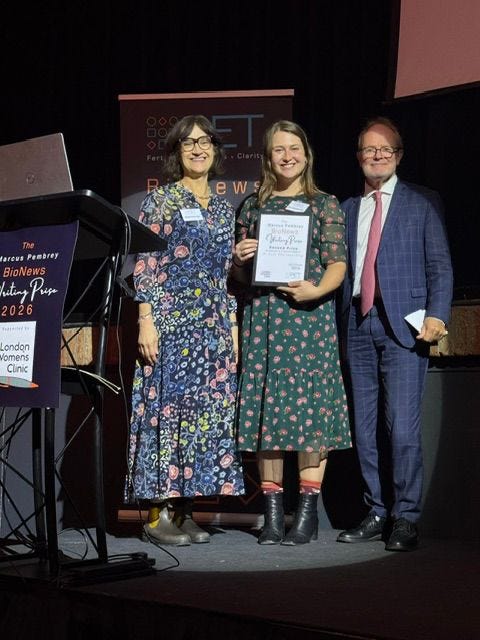
First prize went to Katharina Stock, whose article tackled one of the defining questions of the AI era: trust. Through the recurring image of an embryologist, a patient and a tiny cluster of cells, she explored the black-box nature of AI while remaining accessible, thoughtful and humane.
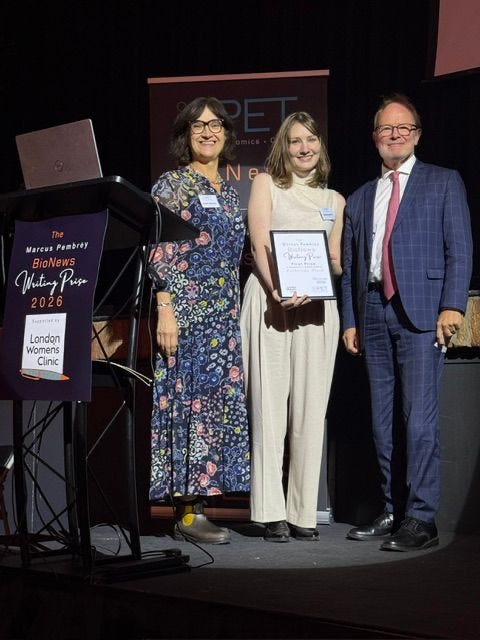
Second prize was awarded to Kate Sheridan Clay, who opened with a fictional scenario involving embryo screening before guiding readers through the realities of polygenic embryo screening.
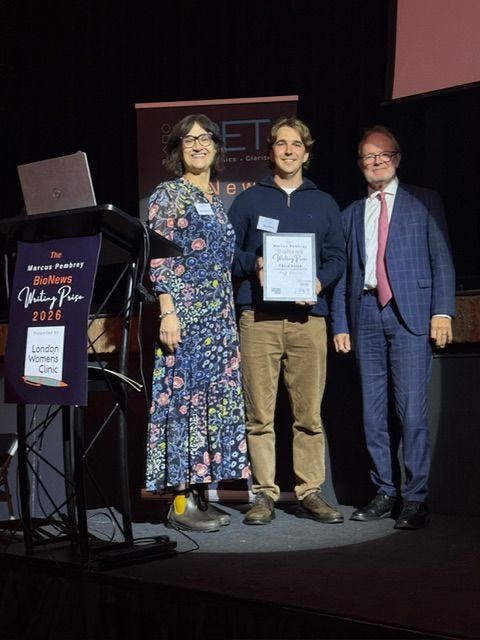
Third prize went to Guy Davies, whose article offered a clear and evidence-based discussion of explainability and accountability in AI systems. He combined rigorous reporting with a determination to show readers not merely what these technologies do, but how they might be scrutinised.
What struck me was not simply the quality of the writing but the importance of the challenge. Decisions about embryos, diagnosis and fertility treatment involve probabilities, uncertainties and deeply personal choices. AI may help make those decisions. But understanding how a recommendation is reached by an AI, and why we should trust it, should be just as important as the recommendation itself.
The strongest entries recognised that science is ultimately about people. They focused on patients, clinicians and researchers confronting uncertainty. They resisted the temptation to portray AI either as salvation or catastrophe but embraced complexity.
Marcus Pembrey, the pioneering geneticist after whom the prize is named, would approve. Throughout his distinguished career, Marcus championed not only scientific research but understood that discoveries matter little if they are not explained, debated and placed within their human context.
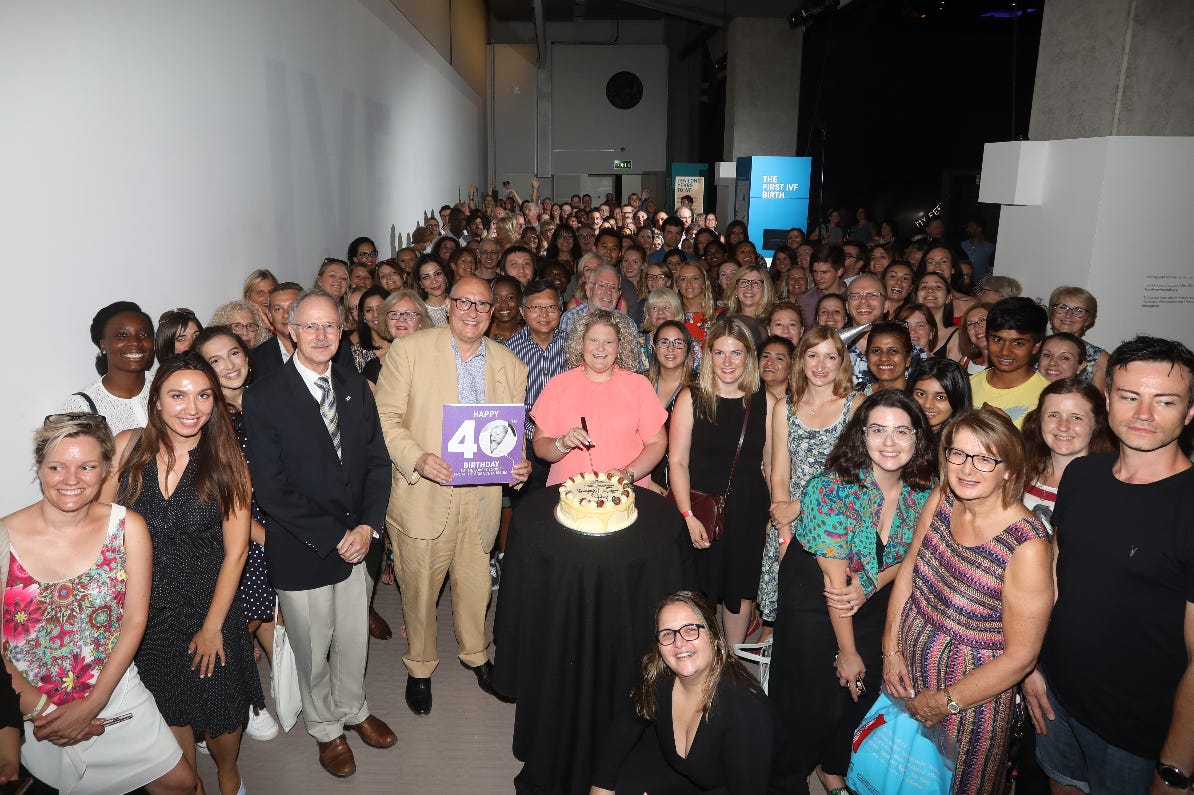
My own career has repeatedly reminded me how scientific advances become most meaningful when they intersect with our hopes, fears, families and futures. As a journalist I reported on the pioneers of IVF, Patrick Steptoe and Bob Edwards. I attended the first press conference on preimplantation genetic diagnosis. I wrote about Dolly the sheep and, before her, the cloned sheep Megan and Morag. Oh, and let’s not forget Tracy, the pioneering pharm animal. Later, at the Science Museum, I worked on exhibitions exploring IVF and reproductive technologies and helped celebrate the birthday of Louise Brown, the world's first IVF baby.
In my David Attenborough Award Lecture at the Royal Society earlier this year I argued that if humans are to resist bad stories, we need better ones. Facts and evidence matter, for sure. But we also need compelling accounts that help people understand not only what science knows but how science knows it.
Which is why the work of young science writers is becoming more valuable, as I have argued before. In an age when machines can generate endless content quicker than we can comprehend it, the scarce resource is not information but judgement. The winners of this year's Marcus Pembrey BioNews Writing Prize demonstrated precisely that quality.