
I first interviewed Adrian Owen two decades ago, when he made headlines worldwide with a brain scanner experiment which showed that some vegetative state patients are actually conscious and aware of what is going on around them.
We almost co-authored a book together about this remarkable – and unsettling – discovery but, in the end, I wrote his research up in a long form article, The Mind Readers, and the research became the subject of his first book, Into the Grey Zone. A film is now in the works.
Since our first encounter, when he worked at the MRC Cognition and Brain Sciences Unit in Cambridge, Adrian has moved to Western University in Ontario, where he runs a big team.
We have since done events and mass experiments together. The biggest was published in 2012, when we found that IQ, that famous number, doesn’t really hold up. It caused a huge hoo-ha.
That study forms a pillar of Adrian’s new book, Think Before You Think, in which he focuses on executive function (I should also add that I’ve given it a cover quote).
Intelligence decides how well you can solve a problem. Executive function decides whether you stop, notice the problem and bring your intelligence to bear on it. Which is why someone can be capable and still act impulsively, procrastinate and repeat mistakes.
RH: What is the elevator pitch for your new book?
AO: Think Before You Think rips the lid off the myth that we’re in full control of our minds, revealing how a hidden set of mental tools, called executive functions, shape everything from our decisions to our distractions.
Through stories of the sorts of everyday mishaps we all make, and patients with conditions like concussion, Alzheimer’s disease, Parkinson’s disease and ADHD, I talk about the executive functions of the brain and how understanding and mastering them can help you get off autopilot and take control of your life.
RH: You and I have known each other for decades yet I still don’t know how you ended up in neuroscience. Where does your own story start?
AO: I can trace my career back to a number of events. First, just after turning 14, I was diagnosed with Stage IIa Hodgkin’s disease and given a ten percent chance of survival, something I did not learn until years later. Over the next two years I was treated with a barrage of toxic drugs and subjected to every type of scan - PET, CT, MRI, x-ray and so on. I became and remain fascinated with medical imaging, those cool pictures of various internal organs, sometimes rendered in three dimensions, all acquired without touching my body.
Second, when my mother died of an invasive brain tumour in 1992 while I was completing my PhD. In the year leading up to her death, the most remarkable thing was how her own behaviour went haywire. For example, one afternoon she disappeared for hours on end and upon her return explained that she had been to see a film at the local cinema. She hadn’t been to the movies in years and certainly not on her own in the middle of the day. I deduced that her executive functions were running awry. That stayed with me.
RH: And there’s also something to do with our mutual chum, Richard Wiseman, perched in a tree?
AO: When I realised that executive function is at the heart of every decision we make, and every thought we have, it was 1986 and I was sitting in a tree in the New Forest in Hampshire, England, with Richard Wiseman (today, Richard is a Professor of the Public Understanding of Psychology and author of several best-selling books, but back then he and I were studying for a psychology degree at University College London).
After hours of pondering what makes one person ‘smarter’ than another, Richard and I agreed that we really had no idea what IQ was and whether it even made sense. Can a single number really describe how smart someone is? Can it really capture the many facets of our intellectual abilities? If your IQ is higher than mine, does it really mean you’ll be better at everything? If not, why not?
Consider curiosity, creativity, imagination, inspiration, intuition, introspection, all words that we understand and collectively use to describe successful individuals. Yet none have anything to do with IQ. I left that outing determined to find out what gives some people an ‘edge’ over others.
RH: What exactly is an executive function?
AO: Executive functions are the brain’s management system, through the abilities that allow us to focus our attention on what’s important, hold information in our mind while we use it, plan ahead, resist distractions and temptations, regulate our emotions, and understand what other people are thinking.
They don’t determine how intelligent you are.
They determine how effectively you use the intelligence you already have.
In fact, I’d go further.
I think executive functions quietly shape almost every aspect of our lives. They influence how well we do at school and at work, how successful our relationships are, how we raise our children, how we make decisions with money, how we cope with stress and even how successfully we age.
RH: Where is executive function located in the brain?
AO: Our executive function is usually traced to a network of brain regions situated primarily in the prefrontal cortex, just behind the forehead.
However, my research emphasises that executive functions cannot be pinned down to just one spot. There’s a frontal lobe hub, where you can find the primary areas responsible for high-level tasks like decision-making, planning, problem-solving, and reasoning.
Importantly, however, executive function depends entirely on how different underlying brain systems interact. Using advanced neuro-imaging, my research shows that these regions rely heavily on white matter pathways – think of them as the data cables of the brain.
I have encountered patients (such as former athletes) who suffered a “communication breakdown”. Even if the frontal lobes themselves aren’t directly destroyed, if the white matter pathways connecting them to the rest of the brain become damaged or isolated, a person loses their executive control.
Ultimately, executive function should not be viewed as a single “control centre,” but as a distributed, highly interactive management system anchored by myriad connections in the prefrontal cortex.
RH: You use an orchestra metaphor for executive function – tell me more
AO: Yes, it is a bit like the conductor of an orchestra.
The audience tends to notice the violins or the brass or the percussion, but they often overlook the person who’s coordinating everything.
Executive functions are just like that. They don’t perform the music but they make sure everything comes together at exactly the right time. They also explain why so many seemingly unrelated conditions have something important in common.
Whether it’s ADHD, concussion, Parkinson’s disease, Alzheimer’s disease, or even the normal ageing process, one of the first things that often changes is not intelligence, but the ability to organise, prioritise, adapt, and regulate behaviour.
RH: Tell me about some of the patients you have encountered
AO: My first investigations into executive function began in the late 1980s when I was a PhD student at the Institute of Psychiatry, south London. One young patient, whom I’ll call Stephen, had undergone surgery to have a type of rare tumour removed from his orbitofrontal cortex, the underside of the front part of the brain. Unfortunately, some “good” pieces of brain had to be removed along with the “bad”.
Before, Stephen was described as a “shy and intelligent young man.” Afterwards, he had become wildly disinhibited. One day, he persuaded a friend to hold his ankles while he hung out of the window of a speeding train. His skull and most of the front part of his brain were crushed when he crashed headlong into a tunnel.
What struck me most about him, more than his disfigurement or cursing, was his runny nose, which he dealt with by wiping his nostrils on the sleeve of his denim jacket. It was only later I came to understand that it was cerebrospinal fluid, a watery liquid that flows in and around your brain and spinal cord to help cushion them from injury and provide nutrients.
Despite his horrendous injury, this young man was not physically or mentally disabled in the traditional sense, and he was not dependent on anyone else. In fact, he continued to live his life pretty much as he pleased. Of course, to the outside observer there was nothing “normal” about this life. But as far as the patient was concerned, he was continuing to function effectively, barrelling through life like the proverbial bull in a china shop.
I then tested an elderly female patient with frontal lobe damage who had a complete lack of inhibition. As she sat, bolt upright, apparently concentrating on the simple memory test I had given her, I suddenly felt her hand sliding up my thigh to my crotch. I handled it as best I could, gently removing her hand and saying, “please concentrate on the test”. “Oh, I had no idea what I was doing!” she said. Nevertheless, within a couple of minutes the hand was back, sliding purposefully up my leg.
Then came Beryl who, after brain surgery, would obsessively organise her books.
What I began to notice was that all the most interesting patients I was encountering had some kind of damage to their frontal lobes. Strange behaviours differed from patient to patient; yet in every case, frontal lobe damage was the culprit, and an impairment of one or more of their executive functions was the result.
RH: Executive function should concern all of us, which brings us to the mass study of cognition you and I did together. Remind the reader what it found.
AO: One of the biggest studies ever conducted in my lab involved more than 100,000 people completing a series of cognitive tests online, launched with you when you were editing New Scientist.
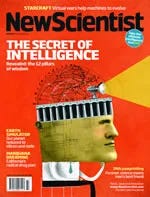
We wanted to answer a deceptively simple question: is intelligence really just one thing? The answer, based on a sample of more than 44,000, surprised us.
Intelligence - whatever we mean by that word - turns out to be at least three separate things riding on distinct brain networks, a collection of distinct mental abilities, many of which depended heavily on our executive function. With you, Adam Hampshire and Beth Parkin, we published our findings in the journal Neuron, in a study entitled “Fractionating Human Intelligence.”
And that changed the way I think about human potential. Success in life isn’t simply about having a powerful brain. It’s about having the mental tools to use that brain power effectively day after day, decision after decision.
RH: You make the somewhat reassuring claim that even clever people are perfectly capable of being idiots.
AO: We’ve all met people who are extraordinarily bright, but somehow never quite fulfil their potential.
They procrastinate, they make impulsive decisions. They struggle to organise their lives. They make the same mistakes over and over again.
Now, equally, we’ve all met people who might never describe themselves as intellectual giants, yet consistently they make wise decisions. They build successful relationships and they seem to navigate life with remarkably good judgement.
What’s the difference?
Well, I would argue that it’s often executive function.
RH: Once you start looking for the fingerprints of executive function in everyday life, are they everywhere?
AO: Yes. Think about the last disagreement you had with someone close to you.
Perhaps you said something you regretted in the heat of the moment.
That’s inhibition and emotional regulation right there, and those are key executive functions.
Think about trying to juggle several things at work while remembering to collect the children from school and pick up the shopping on the way home.
That’s planning, attention, and working memory.
Three more key executive functions.
Think about meeting someone new and, as the conversation unfolds, you’re constantly trying to work out what they’re thinking, what they already know, whether they’re joking, whether they’re interested, whether you’ve said too much or too little.
That’s theory of mind, which is another important executive function.
RH: Is AI influencing executive function to make us stupid?
AO: The other day I asked ChatGPT to draft an email that I could easily have written myself. I tweaked a few sentences, then hit “Send”. For a moment, I felt rather pleased with myself. Then another thought occurred to me. Had AI just made me more productive, or had it quietly persuaded me not to think?
If you’d asked me that question a few years ago, I’d probably have joined the growing chorus of voices worrying that smartphones, social media and AI are slowly eroding our ability to concentrate, remember things and think for ourselves.
But the more I’ve looked at the existing neuroscience, the more I’ve become convinced that we’ve been getting all hot and bothered about the wrong issue. The problem isn’t what technology is doing to our brains. It’s what technology is increasingly allowing us not to do.
Despite what many fear, none of this means our brains are shrinking or that our executive functions are disappearing. In fact, the neuroscientific literature is far more nuanced than the headlines suggest. For example, some technologies actually enhance aspects of our cognitive abilities, rather than diminish them. My own research, including a study I did with you recently for the Manchester Science Festival, has found that regular video game players often perform better on some cognitive measures, such as working memory and reasoning, than non-gamers, while other studies have found little evidence that smartphones impair executive function directly. The effects depend on what technology you’re using, how you’re using it and, crucially, what you’re choosing not to do while you’re using it.
The real issue isn’t cognitive decline. It’s cognitive substitution.
RH: You invoke the idea of the extended mind to show the influence of AI – do explain.
AO: For centuries, humans have been outsourcing parts of their thinking. We wrote shopping lists instead of memorising them. We invented calculators rather than performing long division in our heads. We kept diaries, calendars and (if you are as old as me) address books because our memories are finite. Artificial intelligence is simply the latest and most powerful example of this. The philosophers Andy Clark and David Chalmers famously argued that these external tools don’t merely support thought, they become part of the thinking process itself. They called this the “extended mind.”
I think he was right.
My smartphone isn’t replacing my memory any more than a pair of glasses replaces my eyesight. It’s extending my cognitive abilities beyond the biological limits of my brain in the same way that my glasses allow me to read the impossibly small menus that restaurants seem to favour these days. The interesting question is what happens when extension quietly becomes substitution.
RH: Why does substitution of our cognitive functions by AI bother you?
AO: As a neuroscientist and, perhaps more importantly, as the father of a 12-year-old, I do worry. By the time his generation reaches adulthood, AI will be woven into almost everything they do. What bothers me is whether he’ll still have enough opportunities to take ownership of difficult problems, to tolerate frustration, to concentrate without interruption and to discover the quiet satisfaction that comes from solving something for himself.
Perhaps that’s why the debate about technology has become so unhelpful. It asks us to choose between two equally simplistic positions: either technology is destroying our brains or it’s an unqualified force for progress. The neuroscience suggests something much more interesting. Technology is neither hero, nor villain. It is a tool. Like every powerful tool, its effects depend less on the technology itself than on the choices we make about how we use it.
We often talk as though technology presents us with a choice between convenience and cognition (”use it or lose it”). I don’t think that’s right. The real choice is between being deliberate and being automatic. Sometimes the smartest thing you can do is let AI write the routine email, let GPS find the quickest route or let your phone remember the appointment. But the most important decisions, how to solve a difficult problem, whether to trust someone, what kind of parent, colleague or friend you want to be, who to date, still belong to you. The challenge isn’t protecting your brain from technology. It’s becoming intentional about deciding which parts of your thinking are worth outsourcing, and which should remain gloriously, irreducibly human.
The future won’t belong to people who refuse to use AI but those who know when not to. In short, reserve your own thinking for the things that matter most.
RH: What’s the one thing I can do to hone my executive function to make the right choices?
AO: People are often disappointed by my answer because there isn’t one answer.
If you’re hoping I’ll recommend a particular supplement or a brain training app or a simple daily exercise that’s guaranteed to transform your thinking, I’m afraid the science just doesn’t support it.
I wish it did, but it just doesn’t. But that doesn’t mean there’s no hope. We just have to work a little bit harder to find a solution.
Let me tell you what I mean.
Executive function is a lot like physical fitness. You don’t become physically fit by doing one big thing brilliantly. You become fitter by getting lots of different things broadly right, sleeping well, staying physically active, eating sensibly, and challenging your body regularly.
And our brain seems to work in much the same way. The neuroscientific evidence suggests that executive functions are influenced by all sorts of things.
Regular exercise, good quality sleep, managing stress, maintaining strong social relationships, continuing to learn new skills and keeping mentally engaged throughout life.
Now, none of these things is a silver bullet, but together they create the conditions in which our brains are most likely to thrive.
RH: So there is no silver bullet?
AO: Not quite. Perhaps the most important thing I’ve learned about executive function, though, has nothing to do with lifestyle at all.
It’s awareness.
Once you understand what executive functions are, you begin to notice them everywhere.
You catch yourself reacting impulsively instead of pausing for a moment. You recognise when your attention has drifted. You realise you’re putting off an important task or becoming distracted by something trivial. You become more aware of the moments when you’re letting technology think for you and the moments when your own thinking is the most valuable thing you have to contribute.
Now, that awareness doesn’t make you perfect.
It certainly hasn’t made me perfect, but it does make you more intentional.
RH: The book ends up in free will territory, which is brave. What is your take?
AO: You’re not as in control as you think, but you could be. Many people will come into this book assuming I am going to go one way or another down traditional rabbit holes about cognitive “control” that usually involve free will at some level. There is a huge literature on how we control what we do and much of it has to do with whether or not a particular author believes we have free will. In this book, I take a different perspective arguing (subtly) that the reason we might think we don’t have free will is not because we don’t have it, but because we are not really using it (or we have largely given up bothering). The problem is, free will is not really a neuroscientifically tractable concept, so I have come at the question through the lens of what is known about how our brains are constructed to allow us to think, attend, remember, plan, problem solve and so on, and arrive at what I think is a novel set of conclusions: we have it, we generally don’t bother using it but, if we did, life would get a whole lot better.
RH: What do you want people to have learned when they put your book down?
AO: This isn’t a book about thinking harder; it’s a book about thinking smarter. Think Before You Think takes you on a tour of the mental tools that help us focus, plan, resist temptation, and generally keep it together (or not). Drawing on decades of neuroscience research, personal anecdotes, and patient stories, I offer a fresh take on why we do the things we do, even when we know better. This book unpacks what executive function is, why it matters, and how you can get better at using it. You’ll come away understanding your brain’s control panel, and wondering how you’ve made it this far without reading the manual.
Because in the end, executive function isn’t just about how our brains work. It’s about how we choose to use the brains that we have. After reading this book, my hope is you’ll never say “I wasn’t thinking” again.
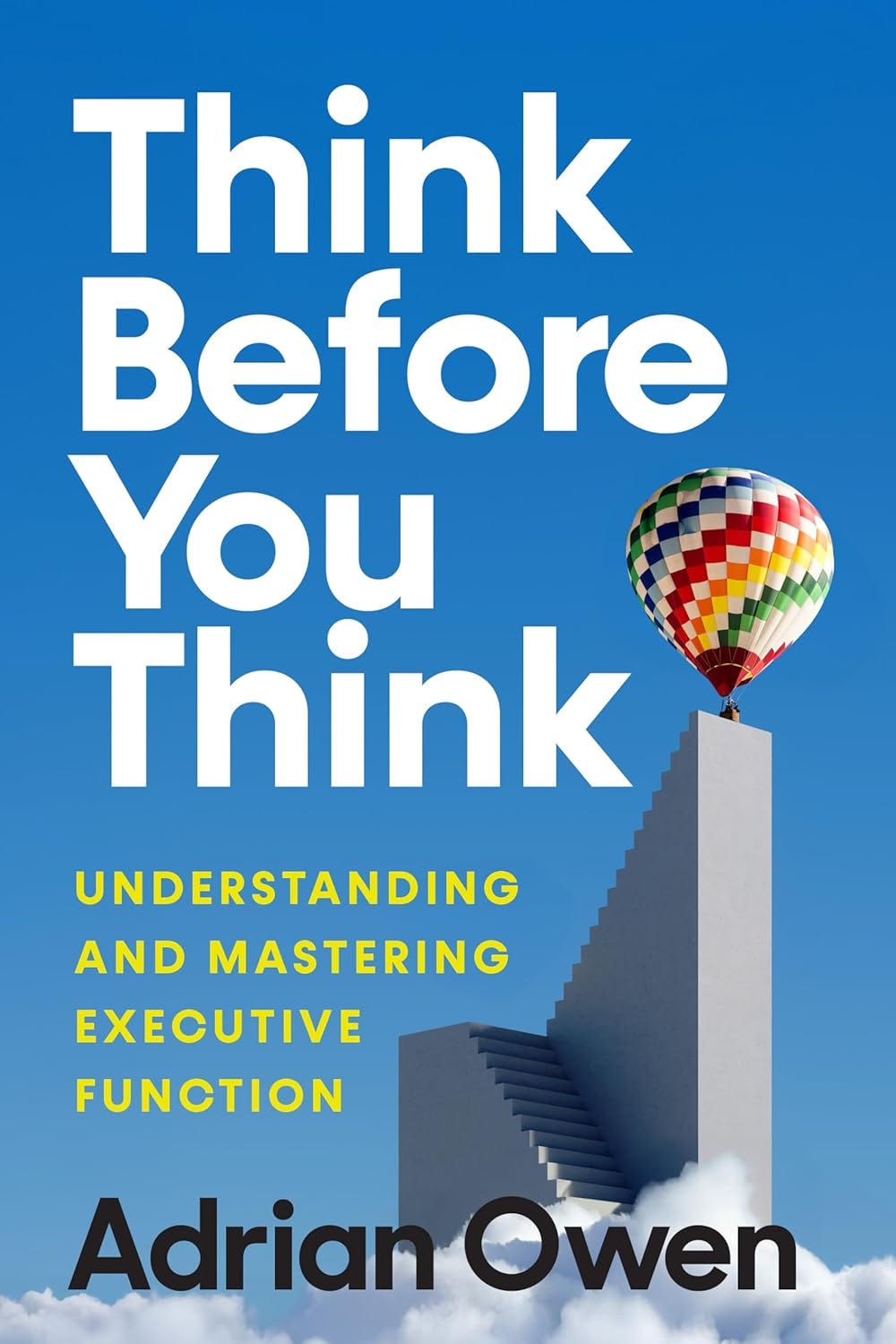
Think Before You Think: Understanding and Mastering Executive Function by Adrian M. Owen, is published by W. W. Norton.
Adrian Owen is Professor of Cognitive Neuroscience and Imaging at Western University and founder and Chief Scientific Officer of Creyos.
This article draws on a range of sources supplied by Adrian Owen, from emails to a podcast, which were edited and then checked with him.